
As organizations grow, process complexity increases faster than headcount. Without structured workflows, efficiency declines while risk rises.
What starts as a simple task can quickly become a mess of emails, manual checks, and confusion over who is responsible. This makes it harder to make decisions and manage operations. Workflow management software helps businesses create, automate, and track clear processes across different teams. A good system makes sure tasks happen in order; approvals follow rules, and everyone knows their responsibilities. Instead of waiting for delays, leaders can see work progress in real-time, allowing for quicker and better control.
In this blog, we look at how modern workflow platform help businesses grow, what important features to consider, and a simple checklist for decision-making. We also discuss processes that use automation, common problems in operations, and examples focused on finance. Lastly, we point out new trends that are changing workflow processes, helping organizations make smart, long-term choices for their processes.
|
“Automation applied to an efficient operation will magnify the efficiency. Automation applied to an inefficient operation will magnify the inefficiency.” — Bill Gates, Co‑Founder, Microsoft |
What Is a Workflow Management System and How It Works
A workflow management system shows how work moves between people, systems, and decisions. Unlike simple task tools, it follows set rules, dependencies, and approvals. This helps to remove confusion and keeps work moving in the right order. Visual tools let teams clearly outline processes, making it easier to repeat tasks.
A good workflow system also connects with other business platforms like finance, purchasing, and document tools. This connection cuts down on manual work and duplicate data. As a result, organizations face fewer delays, have better accountability, and work more smoothly across departments.
DID YOU KNOW?
Organizations that implement structured workflow systems report up to 30% faster task completion and significantly fewer manual errors compared to teams relying on emails and spreadsheets.

Business Automation Workflow: Enabling Scalable Execution
Business automation workflows eliminate repetitive manual tasks by applying rules to execute them seamlessly. It automatically starts tasks, approvals, and notifications, which cuts down on delays and the need for reminders. Automation makes things faster, more accurate, and consistent.
When automation is part of a larger workflow system, businesses can adjust easily without losing control. Processes can change with new policies or increased workload. This helps teams grow their operations without adding more administrative work or risk.
Essential Features of the Workflow Software
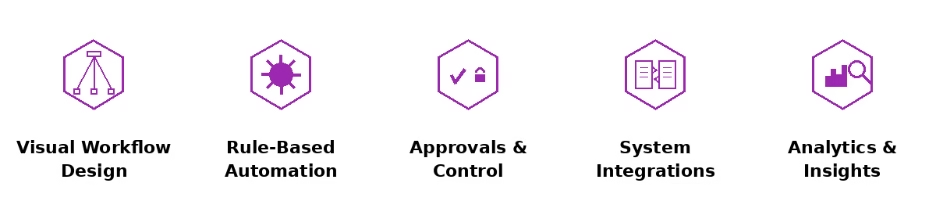
The best workflow software puts together automation, easy tracking, and rules in one place. It has key features like simple process design, rule-based automation, and real-time monitoring. Access controls, approval steps, and analytics and insights help keep everything in check without slowing things down.
Better workflow programs also have dashboards that show timing and point out problems. They work well with other company systems to ensure everything runs smoothly together. All these features make workflows useful and easy to expand, instead of just separate tasks.
Workflow Management Software Feature Checklist
Before choosing a workflow management software, it’s important to evaluate features against clear business requirements. This ensures the platform delivers efficiency while supporting compliance and scalability. A checklist enables objective comparison across vendors.
Here’s a feature checklist to guide your selection of a workflow management system:
| Feature Area | Key Capabilities | Business Impact |
| Workflow Design | Visual builders, templates | Faster adoption |
| Automation Rules | Conditional logic, triggers | Reduced errors |
| Approvals & Controls | Hierarchies, audit logs | Compliance readiness |
| Integration | ERP and finance systems | Data accuracy |
| Analytics | SLA and cycle tracking | Performance insights |
Using a structured checklist reduces implementation risk and supports long-term operational success.
Workflow Management for Accountants and Finance Teams
Workflow management for accountants prioritizes accuracy, traceability, and compliance. Finance workflows typically include invoice processing, approvals, reconciliations, audits, and reporting cycles. Real-time invoice status visibility plays a vital role in finance workflows by enabling better payment tracking, faster issue resolution, and improved financial transparency. Structured workflows enforce approval hierarchies and segregation of duties.
By using a reliable workflow management system, finance teams maintain complete audit trails and reduce regulatory exposure. Automated workflows also shorten close cycles and improve reporting accuracy, allowing accountants to focus on analysis rather than manual coordination.
DID YOU KNOW?
Finance teams using structured workflow management software can reduce invoice processing time by up to 40%, improving accuracy and speeding up approvals.
Trends Shaping the Future of Workflow Systems
With the expansion of enterprises, currently, workflow systems expectations no longer rely on simple task automation but on intelligent, flexible systems. The modern workflow platform is emerging as strategic facilitators that enable quicker decision-making, operational flexibility, and scalability over the long run.
The major trends which affect workflow systems are:
- Intelligence driven by AI: The workflow systems currently use AI to determine the bottlenecks, flag inefficiencies, and suggest process improvements in real time.
- Low-code and no-code design: The business teams are allowed to configure workflow platforms with minimal IT interventions, allowing the processes to be deployed and changed much faster.
- Cloud-first architecture: Cloud workflow systems enable remote workforce, automatic updates, as well as enterprise scalability.
- Reconfigurable workflows: Workflow components can be configured in a modular fashion to enable organizations to change processes fast as businesses change.
- Advanced analytics: Advanced analytics forecast the occurrence of delays and risks even before them affecting execution.
Collectively, these trends make workflow systems a fundamental element of enterprise digital transformation and not an enabling tool.
Common Challenges Solved by the Right Workflow Management Software
Many organizations face operational friction due to disconnected processes, manual follow-ups, and lack of accountability. Without structure, even simple workflows become difficult to manage as scale increases.
A robust workflow management software helps address these challenges by:
- Eliminating process fragmentation: Centralizing workflow management software reduces dependency on emails and spreadsheets.
- Reducing manual coordination: Automated task routing and notifications minimize delays and follow-ups.
- Improving visibility: Real-time tracking provides clear ownership and progress status.
- Strengthening compliance: Built-in approvals and audit trails ensure policy adherence.
- Supporting scalability: Standardized execution enables growth without operational strain.
By resolving these core challenges, workflow management software helps organizations operate with greater efficiency, control, and resilience as they grow.
Why Procbay Aligns with Enterprise Workflow Needs
Procbay is dedicated to formal performance, transparency, and management of enterprise processes. Its platform uses consistency of the processes, intelligent automation, and integration with available systems.
Procbay is able to assist organizations in decreasing complexity and maintaining control by assisting configurable workflows and centralized oversight. The platform is created to grow with the business without affecting operational friction.
Choosing Workflow Systems Built for Scale
Workflow management software is no longer a luxury to enterprises that are growing. Operational resilience requires structured execution, visibility, and compliance. Organizations can grow more efficient by minimizing risk and maximizing efficiency by considering features carefully and aligning systems to long term needs.
Businesses that invest in scalable and intelligent workflow systems are in a position to grow over time, govern themselves better, and make decisions faster in a highly dynamic business world.
Unlock the full potential of your enterprise workflows, Experience how intelligent, scalable systems drive efficiency, compliance, and growth. Schedule a demo with Procbay today and take the next step toward operational excellence.
FAQs
Q: What is workflow management software?
A: Workflow management software automates and tracks business processes to improve efficiency, visibility, and control.
Q: How does a workflow management system improve productivity?
A: A workflow management system reduces manual effort, speeds approvals, and ensures tasks move without delays.
Q: What defines the best workflow software?
A: The best workflow software combines automation, analytics, integrations, and governance for scalable execution.
Q: Can workflow programs support compliance?
A: Yes, workflow programs maintain audit trails and standardized approvals to meet compliance requirements.
Q: How do workflow systems enable automation?
A: Workflow systems automate tasks and approvals, enabling consistent and scalable business execution.
Connect with our procurement experts to tailor an AI-governed sourcing strategy for your enterprise.
Contact Us