
01
Generates RFI, RFP, and supplier questionnaires automatically.
Stop rebuilding questionnaires from old templates. Generate a complete, scorable set in minutes, with every compliance and due-diligence question already in place.


The Questionnaire Builder Agent is the AI questionnaire generator built into Procbay.
It works as the RFx questionnaire capability that assembles complete, scorable questionnaires from category, scope, and supplier context, with compliance questionnaire and due diligence questionnaire items injected by default.


Generates RFI, RFP, and supplier questionnaires automatically.
Injects compliance questionnaire and due diligence questionnaire items.
Cuts manual drafting and supplier back-and-forth.
Complete questionnaires in minutes instead of copy-paste from old templates.
Required compliance and due diligence questions are never left out.
Structured, scorable responses make evaluation objective.
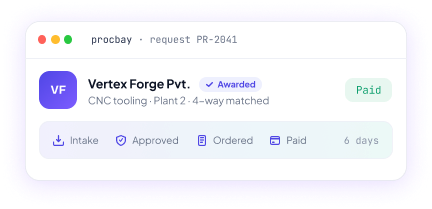
Create tailored questionnaires from category, scope, profile, and RFx type.
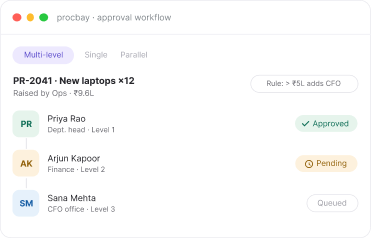
Build RFI and RFP questionnaires in a structured, scorable format.
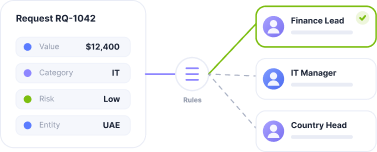
Inject security, ESG, and regulatory questions automatically.
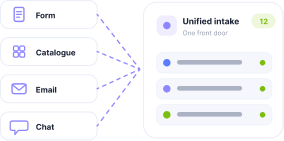
Generate due diligence questionnaires for supplier checks and risk reviews.
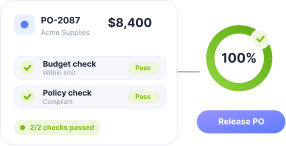
Save any questionnaire as a template for the next event.
The agent drafts; the buyer reviews and approves.
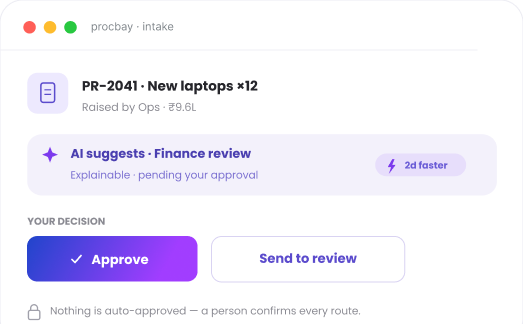


Every question can be changed, added, or removed.
Define the mandatory questions for your business.
Nothing goes out without approval.
Questionnaire versions are logged.
Target ranges based on Procbay success-metric benchmarks and typical enterprise deployments; actual results vary by scope and operating model.
01
Tailored to the category and event.
02
Compliance and due diligence always included.
03
Clear scope means cleaner responses.
04
Structured for objective evaluation.
The Questionnaire Builder Agent powers questionnaires in Strategic Sourcing and Supplier Lifecycle Management.
Explore Strategic Sourcing ?Frequently asked questions
It is software that automatically creates tailored questionnaires from context, rather than requiring you to build each one from a blank or borrowed template.
Yes. Due diligence questionnaire sections are generated and injected automatically for supplier checks and risk reviews.
Yes. It injects compliance questionnaire items across security, ESG, and regulatory requirements by default.
Yes. As rfx questionnaire software, it adapts questions to the event type and purpose.
Yes. You have full control to edit, add, or remove questions before sending.
Yes. Any questionnaire can be saved and reused as a template.
Yes. Questionnaires are structured so responses can be evaluated consistently.
Strategic Sourcing and Supplier Lifecycle Management.
Book a demo to watch complete RFx and due diligence questionnaires built in minutes.