Nowadays, organizations struggle to sell assets, inventory, and commodities due to traditional negotiation-based sales methods that cause long sales cycles, unclear pricing, and low transparency. Manual processes add further complexity to a competitive, compliance-driven market. Forward and reverse auctions provide a transparent, efficient alternative, enabling faster price discovery, streamlined operations, and quicker deal closure.
This blog will examine how the Forward Auction provides an answer to the above challenges through structured competition and technology. This will include an overview of the procedure followed in a forward auction, its use cases in an enterprise, and the effect on the business, along with its support with technology for an efficient forward auction. This article also describes the support provided by technology to enterprises through platforms like Procbay for an efficient forward auction.
Understanding Forward Auctions in a B2B Context
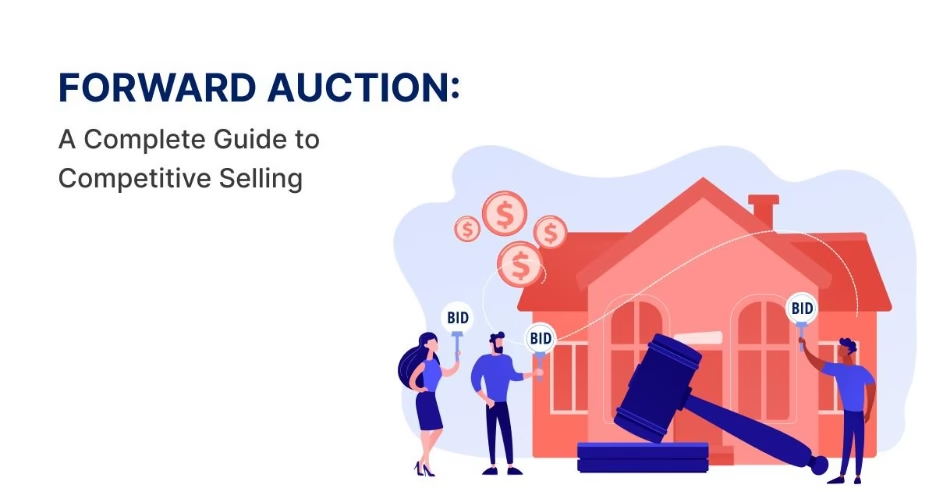
A forward auction is when sellers lead the process, and buyers try to outbid each other by offering higher prices over a set of time. This approach is different from forward auction models, where sellers compete to offer lower prices. Forward auctions work well when sellers want to get the most value, not just the lowest cost.
They are often used to sell extra items, commodities, and leftover stock. With more online tools, companies can reach more buyers and follow clear rules. Using a good forward auction tool helps keep things fair and consistent, reducing the need for one-on-one talks.
When Should Enterprises Use Forward Auctions?
Forward auction procedure works best when sellers want to get the most value in clear conditions. Businesses should think about using forward auctions when selling extra assets, goods, or regular stock.
They are great when many buyers are interested and prices are changing. Companies in regulated or monitored areas gain from the clear records that auctions create. Also, businesses with sales in multiple locations can use a central auction to keep things the same. When quickness, fairness, and accurate pricing are important, forward auctions provide reliable results with the help of processes and technology.

Practical Enterprise Use Cases
Forward auctions are commonly used in many industries where competitive selling, fairness, and speed matter. These examples show how businesses use forward auctions to get good results.
- Selling Old Machinery: Businesses sell extra or outdated machines in auctions, allowing more buyers to participate and get better prices through competitive bids.
- Selling Raw Materials: Companies that sell raw materials hold scheduled forward e auctions to set clear prices based on the market, avoiding long talks about prices.
- Clearing Seasonal Stock: Stores use forward auctions to quickly sell extra or seasonal stock without needing to offer big discounts like regular sales.
- Government Auctions: Government agencies sell assets or licenses through forward auctions to make sure the process is fair and open.
In all these situations, forward auctions help businesses sell faster and get better prices.
Forward Auction Lifecycle: Listing to Final Bid
An organized forward auction process allows enterprises to have organized selling, as well as ensuring transparency and control. Organizing the auction cycle into stages allows for better confidence and execution by bidders.
- Asset Identification and Lot Creation:
The seller identifies the merchandise or service and breaks it down into organized lots with specifications and terms and conditions.
- Reserve Price & Auction Rules Setup:
Base prices, bid increments, auction duration, and extension rules are defined to protect seller value.
- Bidder Registration & Qualification:
Buyers register on the platform and are verified to ensure eligibility and compliance.
- Live Bidding Phase:
The auction opens a fixed time window, enabling buyers to place real-time bids through a bidding engine.
- Monitoring & Closure:
All bids are digitally logged for transparency, and the highest valid bid is declared by the winner.
- Settlement & Documentation:
Payments and contracts are completed digitally and archived for governance through forward auction software.
This structured approach minimizes manual intervention while ensuring consistent outcomes.
Benefits of a Forward Auction for B2B Organizations
The benefits of a forward auction far exceed the realm of immediate revenue gains: price discovery is improved with competitive bidding, and there is a reduced reliance on negotiation-heavy selling. Automation displaces lengthy sales cycles and reduces administrative effort. Digital transparency strengthens trust and auditability, mainly in regulated environments. Enterprises also gain important data insights over time, supporting the synthesis of better selling strategies. With more buyers participating and repeat-engaging, forward auctions evolve into a scalable and sustainable selling model, supported by robust forward auction software applications.
Forward Auction vs Traditional Selling Models
Businesses often use direct talks or set prices to sell, which makes it hard to find the best price and slows down sales. A Forward Auction, on the other hand, creates organized competition that shows current market needs. Traditional selling relies a lot on how good the seller is at negotiating and past prices. Forward auctions let prices change based on how many buyers are interested.
This leads to quicker sales, more openness, and better management. For companies selling valuable items or a lot of products, forward auctions procedure lessens the need for manual work and provides consistent results across different areas.
Key Differences:
- Negotiation-based selling has limited buyer involvement.
- Forward auctions allow open and competitive bidding.
- Manual pricing vs price based on market demand.
- Longer sales processes vs faster execution.
This shows why more businesses are choosing digital forward auctions for larger sales.
Measured Enterprise Impact
Enterprises that adopt forward auctions report consistent improvements driven by automation and competitive pricing dynamics.
| Business Metric | Observed Improvement |
| Revenue realization | 12–18% uplift |
| Sales cycle time | 30–40% reduction |
| Administrative effort | ~35% lower |
| Buyer participation | Higher repeat engagement |
These results show that forward auctions deliver measurable enterprise value. Faster cycles improve cash flow, while higher realization strengthens margins. Reduced effort and repeat participation signal trust, scalability, and sustainability.
Role of Technology in Scalable Forward Auctions
Technology helps businesses run large auctions easily without much manual work. Modern auction software takes care of getting bidders set up, checking bids, reporting, and settling payments automatically. It also provides insights into how bidders act and pricing trends, while linking with finance systems to maintain control. By making processes standard and reducing the need for manual work, technology helps achieve the same results everywhere.
Main Benefits of Using Technology in Forward Auctions:
- Automated Bid Management: Tracks bids in real-time and checks them automatically for clear and accurate results.
- Analytics & Insights: Provides data about bidders and pricing to help make better decisions.
- Seamless Integration: Works with finance and management systems to make settling and reporting easier.
- Scalability: Can handle many auctions in different areas without needing extra resources.
- Compliance & Audit Readiness: Keeps digital records that make the following rules easier.
Using technology allows businesses to run larger forward auctions while making them more efficient and reliable.
Brand Authority: Enterprise-Grade Forward Auctions with Procbay
Procbay helps organizations in executing transparent, controlled, and scalable forward auctions. As one of the key players in the field of forward auction software applications, this solution combines business processes with a high level of analytics, which are designed in a manner tailored for selling activities. As a result, organizations with the potential to execute automation in each phase of an auction through Procbay will be able to make use of true market value along with sound governance and compliance.
Experience Scalable Forward Auctions with Procbay
A forward auction represents a tactical way of conducting business for businesses that prefer transparency, efficiency, and better prices. When the correct process and system are implemented, forward auctions result in fast execution, high realization, and sustainability of interest from the buyers. Schedule a demo with Procbay today and learn about forward auctions and their applications in your business.
FAQs
Q: What is a forward auction?
A: A forward auction allows multiple buyers to compete, helping sellers achieve the best market price transparently.
Q: How does Procbay enable forward auctions?
A: Procbay automates the entire auction process with real-time bidding, analytics, and governance controls.
Q: Who should use Procbay?
A: Enterprises, manufacturers, and organizations managing complex selling processes benefit most from Procbay.
Q: How do forward auction software applications add value?
A: Forward auction software applications improve efficiency by automating workflows and enabling competitive, data-driven pricing.
Q: Why choose Procbay as a forward auction software?
A: As a scalable forward auction software, Procbay ensures transparency, compliance, and maximum value realization.
Connect with our procurement experts to tailor an AI-governed sourcing strategy for your enterprise.
Contact Us