Most finance teams still rely on weekly or month-end reports to spot overspend, yet every purchase order that slips through untracked widens the gap between intent and reality. That lag forces Procurement Leads to chase explanations instead of steering strategy, quietly draining savings and hiding departmental spend visibility.
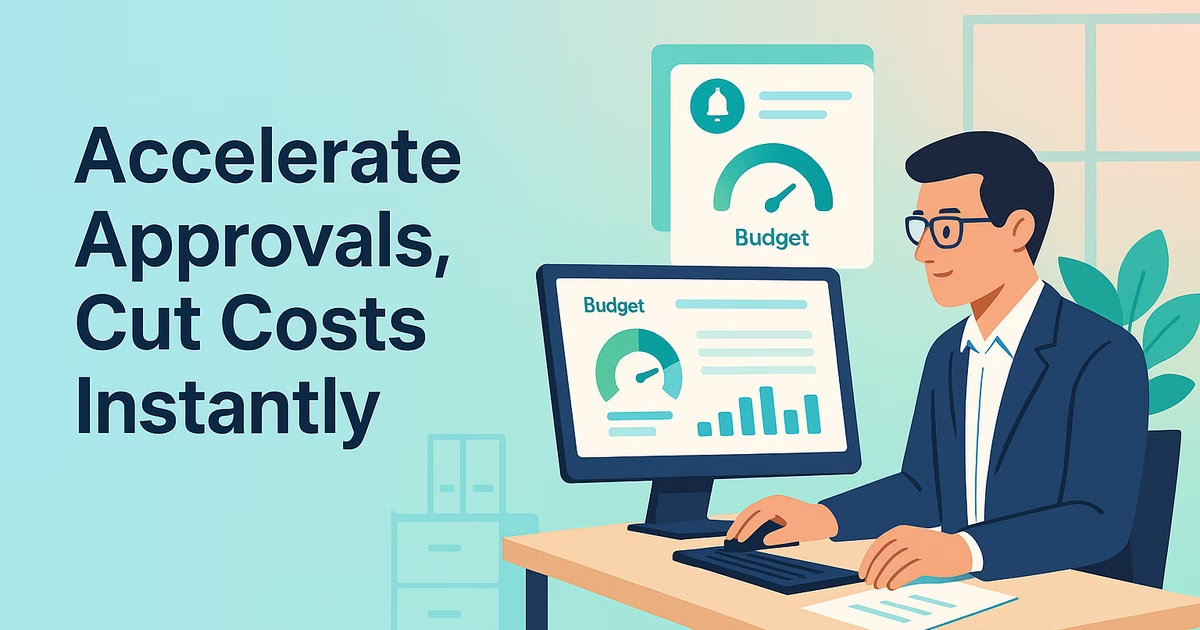
There is a better way: real-time budget tracking pairs live data with instant spend variance alerts so decision-makers intervene before cost creep snowballs. In the next few minutes, we’ll expose why traditional methods fail, introduce a practical framework you can apply today, and show how continuous monitoring unlocks sharper forecasting and stronger negotiating power.
The Hidden Lag: Why Yesterday’s Numbers No Longer Protect Today’s Budget
Monthly roll-ups feel safe because they reconcile, but they arrive long after damage is done. The root problem isn’t a lack of spreadsheets; it’s the delay between commitment and recognition.
- Uncaptured commitments: By the time an invoice lands in Accounts Payable, budget consumption monitoring has missed the original requisition, leaving days or weeks of blind spend.
- Isolated systems: ERPs hold financial truth, yet procurement tools, email approvals, and card programs run in parallel silos. Reconciling them retroactively obscures spend variance patterns.
- Reactive governance: Policies kick in only when finance flags an overage. Front-line buyers never see live balances, so they can’t self-correct.
Until you collapse these timing gaps, approval workflows become policing exercises, and leaders make decisions with stale data.

The Real-Time Spend Control Loop: Capture → Alert → Act → Learn
Closing the lag demands more than dashboards; it takes a continuous feedback system purpose-built for speed and precision.
Step 1: Capture at Point of Intent
- Embedded requisitions: Route every purchase request through a single platform integrated with your ERP chart of accounts.
- Live budget lookup: Instantly display available funds to the requester before submission, aligning choices with reality.
Step 2: Threshold-Based Alerts
- Dynamic spend variance alerts: Trigger notifications when a request pushes a project or departmental budget past pre-set percentages (for example, 80% consumed).
- Role-based routing: Escalate only to stakeholders who can approve or adjust, preventing alert fatigue.
Step 3: Corrective Action
- Inline adjustments: Approvers can edit quantities, split costs, or re-code GL accounts in the same interface, enforcing control without slowing velocity.
- Soft stops vs. hard stops: Low-risk variances warn; high-risk variances block submission until resolved.
Step 4: Continuous Learning
- Variance root-cause tagging: Capture why an overage occurred (scope creep, price increase, maverick supplier) to build a data set for future prevention.
- Feedback to forecasts: Feed tagged data into rolling forecasts to tighten procurement forecasting accuracy over time.
This loop repeats every transaction, creating a living guardrail instead of a retroactive audit.
Configuring Spend Variance Alerts That Drive Action, Not Exhaustion
Alerts work only when they surface meaningful exceptions.
Set Smart Thresholds
- Percent-based for portfolios: Use progressive bands (70%, 90%, 100%) to give departments room to self-correct before finance steps in.
- Absolute amounts for high-value POs: Flag any single request exceeding a set dollar value, regardless of budget position.
Align Alert Channels to Urgency
- Email for advisory notices: Low-risk alerts are summarized daily; keep inbox noise low.
- In-app and mobile push for hard stops: Urgent approvals appear where managers work, shortening cycle time.
- Slack or Teams integration: Collaborative channels let stakeholders resolve exceptions in real time.
Prevent Alert Fatigue
- Bundle related requests: Group multiple low-value orders into one digest.
- Auto-close resolved alerts: When a PO is edited and re-approved, suppress duplicate messages.
- Review thresholds quarterly: Refining limits based on historical variance retains signal strength.
Turning Live Budget Consumption Monitoring into Predictive Power
Real-time visibility solves today’s overspend, but its bigger payoff is tomorrow’s accuracy.
- Shorter forecast cycles: With fresh data feeding models, procurement teams can update commit-based forecasts weekly instead of quarterly.
- Negotiation leverage: Knowing actual run-rates mid-contract arms you to reopen pricing discussions or consolidate volumes before renewals.
- Strategic cash management: Controllers smooth liquidity by spotting deferred spend opportunities early, lowering working capital spikes.
Because the same dataset unites procurement and finance, conversations shift from “What happened?” to “What can we optimize next?”
Where Procbay Fits into the Loop
Procbay embeds the Real-Time Spend Control Loop out of the box. Native ERP integrations capture commitments the moment a requisition is raised, while configurable variance alerts surface exceptions without flooding inboxes. Procurement Leads gain granular departmental spend visibility, and CFOs trust forecasts grounded in live data, no custom IT projects required.
Common Objections and Rapid Responses
“Won’t constant alerts overwhelm my team?”
Adaptive thresholds and role-based routing ensure only actionable variances reach each stakeholder. Most users report a lighter inbox compared to manual follow-ups.
“Our ERP already tracks budgets.”
ERPs record postings after the fact. Real-time budget tracking captures intent before the spend lands, giving you the window to course-correct.
“We’re worried about adoption across departments.”
Integrating approval steps into existing chat and email workflows meets buyers where they work, minimizing change management friction.
Real-time budget tracking, complete with intelligent spend variance alerts and continuous budget consumption monitoring, elevates procurement from gatekeeper to strategic growth enabler.
When live data closes the loop, departmental spend visibility tightens, and procurement forecasting accuracy becomes a competitive weapon.
Book a demo to experience Procbay’s live spend dashboards in action and reclaim control today.
Real-Time Budget Tracking – FAQ
Q: What is real-time budget tracking in procurement?
A: Real-time budget tracking is the process of monitoring procurement spending as soon as a purchase request or requisition is created. It provides instant visibility into available budgets, helping procurement and finance teams prevent overspending before a purchase order is approved.
Q: Why are traditional monthly budget reports ineffective for spend control?
A: Monthly or weekly reports show spending after transactions are completed. This delay makes it difficult for finance and procurement teams to intervene early. Real-time tracking, on the other hand, captures spending commitments immediately and allows teams to take corrective action before budgets are exceeded.
Q: What are spend variance alerts and how do they work?
A: Spend variance alerts are automated notifications triggered when spending approaches or exceeds predefined budget thresholds. These alerts help stakeholders quickly identify budget deviations and take action, such as adjusting purchase quantities, reassigning budgets, or seeking additional approvals.
Q: How does real-time budget consumption monitoring improve procurement forecasting?
A: Real-time budget consumption monitoring provides up-to-date data on committed and actual spending. This allows procurement and finance teams to create more accurate forecasts, adjust budgets quickly, and plan future sourcing strategies based on real spending patterns.
Q: How can procurement teams improve departmental spend visibility?
A: Procurement teams can improve departmental spend visibility by using centralized procurement platforms that integrate requisitions, approvals, and ERP financial data. This consolidation allows decision-makers to monitor spending across departments, identify trends, and control costs more effectively.
Connect with our procurement experts to tailor an AI-governed sourcing strategy for your enterprise.
Contact Us