Summary:
Many enterprises mistakenly digitize broken S2C workflows, hoping that adopting basic order procurement software will fix structural inefficiencies. True transformation requires moving beyond tactical digitization to intelligent execution. Understanding the core benefits of procurement management software allows sourcing leaders to transition from reactive purchasing to proactive category strategy. By leveraging tools like the ProcBay AI Procurement Orchestrator, procurement teams can govern intake, automate bid analysis, and achieve total spend visibility without the administrative drag.
Your team spends three weeks compiling RFQ responses in spreadsheets, only to award the contract to the incumbent supplier because time ran out. The business bypasses intake protocols because the official procurement management system is too convoluted. These friction points do not vanish simply because you moved them from an email thread into a cloud portal.
Procurement leaders evaluating technology often miscalculate the true benefits of procurement management software. They look for digitization when they actually need orchestration. When an enterprise replaces fragmented tools with a cohesive procurement process management software, the goal is not just faster for data entry. The goal is commercial leverage.
By upgrading to an intelligent procurement platform, sourcing professionals to eliminate the manual drag of supplier onboarding, bid evaluation, and contract compliance. Here is how modern procurement management software translates directly into cycle time reduction, cost avoidance, and sustained supplier performance.
Moving From Tactical Purchasing to Orchestrated S2C
The fundamental flaw in legacy procurement software is that it operates as a passive repository. You put data in, and eventually, you pull a report out. A modern procurement management system acts as an execution engine. It guides the business user through structured intake, scores supplier risk dynamically, and identifies contract leakage before the renewal date.
To fully realize the benefits of procurement management software, organizations must view the S2C cycle as a single, governed data stream. When your sourcing software connects directly to your contract intelligence and spend analytics, every decision is auditable and intentional.

Shrinking the Sourcing Cycle Time
Time kills sourcing savings. When category managers are bogged down in manual vendor questionnaires and back-and-forth emails, strategic negotiation takes a backseat. Implementing agile procurement process management software automates the heavy lifting of RFx creation and baseline evaluations.
By bringing structure to your sourcing events, you stop running multi-million-dollar decisions out of personal inboxes. To see exactly how much time you are losing in the bidding phase, review how your team handles the RFx process in procurement. High-performing sourcing software cuts event setup time by days, giving your team the breathing room to scrutinize TCO models and drive harder negotiations.
Eradicating Maverick Spend
Business users bypass procurement when the approved procurement platform is harder to use than their corporate credit card. This maverick spend dilutes negotiated savings and introduces unvetted third-party risk.
Effective order procurement software mandates clean intake workflows. It funnels business demand through a guided, consumer-like catalog or automated questionnaire. When the path of least resistance is also the compliant path, budget control naturally improves. Tracking these compliance rates is critical; it is one of the foundational procurement KPIs every business should track.
Did You Know?
According to industry benchmarking, world-class procurement organizations operate at 21% lower labor costs than their peers, driven largely by process automation and unified technology architecture that reduces tactical intervention.
(Source: The Hackett Group — Procurement Benchmark Findings)
The Tangible Benefits of Procurement Management Software
Evaluating the benefits of procurement management software requires looking past feature lists to commercial outcomes. When implemented correctly, a robust procurement management system delivers measurable ROI across three main vectors: risk, savings, and velocity.
- Cost Avoidance & TCO Reduction: Advanced procurement process management software identifies price variances across business units, consolidating volume for better tier pricing.
- TPRM and Compliance: Order procurement software with integrated KYC agents automatically flags financial, geopolitical, or operational risks before a PO is ever cut.
- Contract Leakage Mitigation: A unified procurement platform ensures that negotiated SLAs and volume discounts are actually tracked and enforced during the lifecycle of the agreement.
Documented Case Outcome: The Agentic Efficiency Shift
Consider the recent shift documented by McKinsey regarding enterprise sourcing software adoption. As supply chain complexity grows, procurement teams are now managing up to 50% more spend per FTE than they did five years ago.
McKinsey estimates that implementing agentic AI within a unified procurement platform can make procurement functions 25% to 40% more efficient. This proves that the true benefits of procurement management software are no longer found in simply digitizing purchase orders. Top-tier organizations are using advanced procurement software to shift their workforce entirely away from routine data entry and toward high-value, strategic category intervention.
“AI lifts value by expanding category management coverage beyond today’s bandwidth, improving outcomes in every negotiation, and opening new pools of value such as automated tail-spend repricing and tighter compliance.” — McKinsey & Company (Source: Redefining procurement performance in the era of agentic AI – 2026)
The Cognitive Dividend: Reclaiming Buyer Bandwidth
When discussing the benefits of procurement management software, most organizations focus exclusively on hard dollar savings. However, there is a massive, underexplored commercial advantage: reducing the cognitive load on your procurement talent.
Without a centralized procurement management system, enterprise category managers spend up to 40% of their week normalizing data across spreadsheets, chasing internal approvals, and manually tabulating vendor scores. When a buyer is bogged down acting as human middleware, they lack the mental bandwidth to challenge incumbent supplier pricing, develop secondary sources, or innovate.
By implementing intelligent order procurement software, you are not just digitizing paper; you are upgrading your human capital. Advanced procurement process management software autonomously parses RFx responses, flags contract anomalies, and summarizes bid variances.
Building a Sourcing “Data Spine”
Legacy tools silo information. A true procurement platform acts as a centralized “data spine,” connecting intake signals directly to your sourcing software and contract repository.
- Contextual Execution: When an employee requests a service, the procurement management software doesn’t just route an email; it checks existing contracts, pulls historical spend, and recommends preferred suppliers instantly.
- Proactive Risk Mitigation: Instead of running quarterly audits, the procurement management system constantly monitors external signals for compliance and financial risk.
Ultimately, the most profound of all the benefits of procurement management software is that it actively prevents talent burnout. By automating tactical busywork, the right procurement software ensures your most skilled professionals are focused entirely on relationship-building, complex market analysis, and aggressive negotiation.
Traditional Order Procurement Software vs. AI-Orchestrated Platforms
Many enterprises still confuse a basic procure-to-pay tool with comprehensive procurement management software. Here is the operational difference when you upgrade from legacy systems to an AI-driven procurement platform.
| Capability | Legacy Order Procurement Software | AI-Orchestrated Procurement Platform | Commercial Benefit |
| Intake | Manual emails or unstructured IT tickets. | Guided, smart-form intake with automated category routing. | Eliminates incomplete requests; speeds up processing. |
| Sourcing | Spreadsheets and disconnected email threads. | Automated bid analysis and scenario modeling via sourcing software. | Accelerates cycle time; identifies best TCO mathematically. |
| Contracts | Static PDFs stored in shared drives. | AI-extracted obligations linked directly to supplier performance. | Prevents contract leakage; ensures SLA adherence. |
| Spend Visibility | Quarterly, retrospective pivot tables. | Predictive analytics and real-time budget control. | Identifies maverick spend immediately; protects cash flow. |
Maximizing the Value of Your Procurement Management System
The true benefits of procurement management software are only unlocked when user adoption is high and data flows seamlessly across the S2C lifecycle. Buying procurement software without standardizing your category taxonomies or cleaning your vendor master data will yield poor results.
Before deploying new procurement process management software, segment your suppliers, define your standard operating procedures for RFx events, and ensure your business stakeholders understand the “why” behind the process change. A procurement platform is a force multiplier, but it multiplies the existing process—whether that process is highly strategic or deeply flawed.
Advancing Your Digital S2C Strategy
Replacing disjointed tools with intelligent procurement management software is the fastest way to move your team out of the tactical weeds. The benefits of procurement management software, reduced cycle times, mitigated supplier risk, and aggressive cost avoidance, are not theoretical. They are the daily reality for sourcing teams that rely on a unified procurement platform. To stop managing data and start orchestrating outcomes, your procurement management system must be built for the complexity of the modern enterprise.
Ready to transform your sourcing strategy? If your team is evaluating how to bring AI-governed structure to your S2C events and eliminate manual administrative drag, a walkthrough ProcBay with our experts can show you exactly what intelligent orchestration looks like in practice.
Frequently Asked Questions
Q: What are the primary benefits of procurement management software?
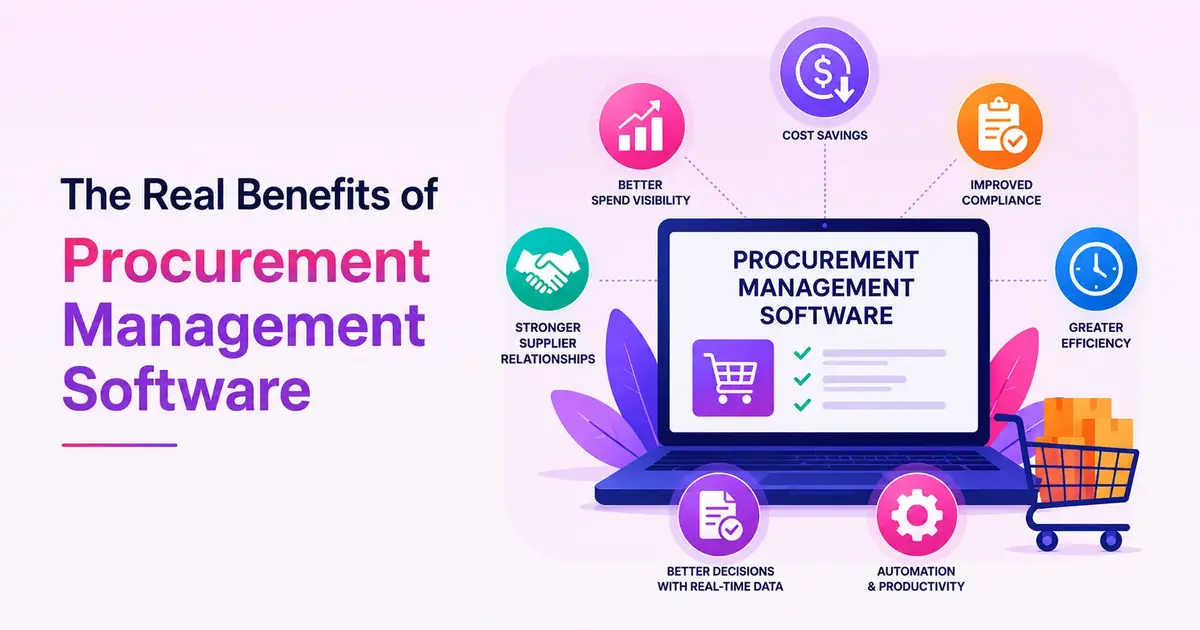
A: The core benefits of procurement management software include drastic reductions in sourcing cycle times, improved spend visibility, eradication of maverick spend, and automated compliance tracking. It shifts procurement from a tactical administrative function to a strategic driver of commercial value.
Q: How does procurement process management software differ from basic P2P tools?
A: Basic P2P (Procure-to-Pay) tools focus heavily on purchase orders and invoice matching. Procurement process management software encompasses the entire Source-to-Contract (S2C) lifecycle, handling complex strategic sourcing, supplier lifecycle management, risk scoring, and contract intelligence.
Q: Can sourcing software really reduce supplier risk?
A: Yes. Modern sourcing software integrates directly with Third-Party Risk Management (TPRM) databases to automatically screen suppliers for financial instability, geopolitical exposure, and compliance violations during the initial bidding and onboarding phases.
Q: Why do employees bypass order procurement software?
A: Employees typically bypass order procurement software when the user interface is clunky, the intake process is confusing, or approval routing takes too long. Implementing a consumer-like, intuitive procurement platform ensures higher adoption and keeps spend compliant.
Q: What is the ROI for implementing a new procurement platform?
A: The ROI of a comprehensive procurement management system is typically realized through hard savings (better negotiated tier pricing and reduced contract leakage) and soft savings (hundreds of hours saved per category manager via automated bid analysis and workflow routing).
Connect with our procurement experts to tailor an AI-governed sourcing strategy for your enterprise.
Contact Us