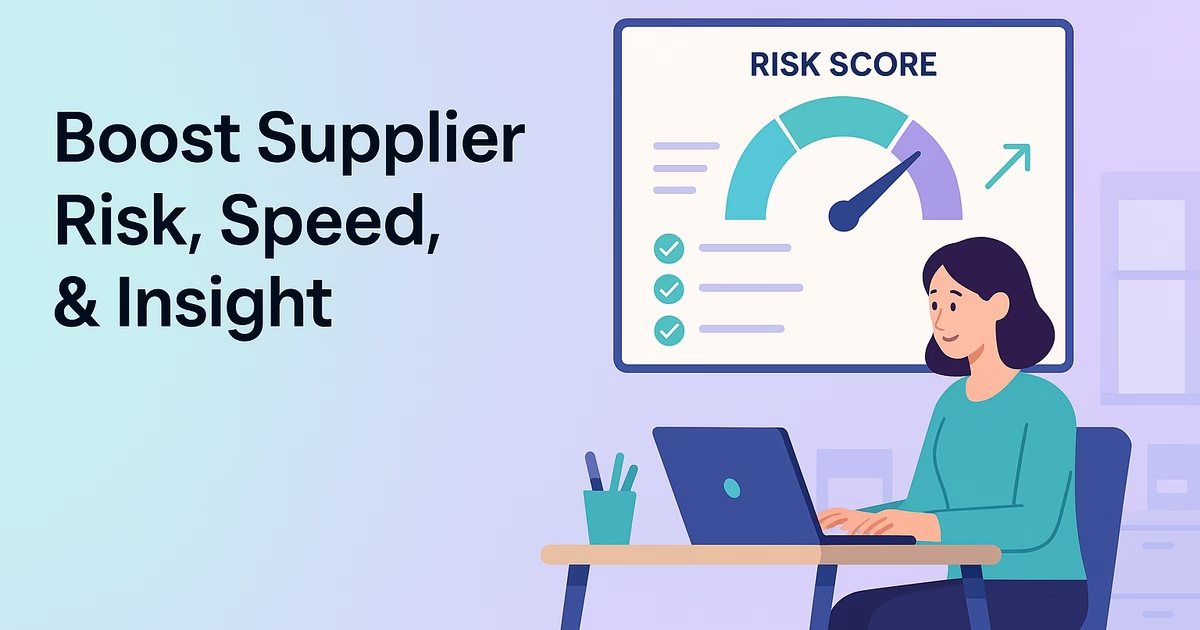
Late-night spreadsheet marathons, incomplete supplier files, and unexpected disruptions drain time and budget from even the most proficient procurement teams. Now, imagine replacing that costly friction with an always-on radar that flags high-risk partners before a purchase order is even raised. In fact, companies using a comprehensive supplier risk assessment report a significant reduction in supplier-related disruptions, proving the payoff is real. In the next few minutes, you will learn exactly how an automated supplier risk scoring system works, which data and risk scoring algorithm are most effective, and what practical steps CFOs, CIOs, and procurement leaders can take this quarter to implement a smarter solution. This approach is key to improving supplier risk scoring for procurement automation.
Why Manual Supplier Risk Scoring Holds Procurement Back
Manual supplier risk scoring, typically a mix of legacy ERPs, emailed questionnaires, and ad-hoc research, creates three significant structural problems:
- Limited Visibility: Data often resides in silos, meaning early warning signs never reach the intake-to-pay process in time.
- Slow Decision Cycles: By the time finance, legal, and compliance teams complete their reviews, the business may have already engaged the supplier, which can fuel maverick spend.
- Audit Headaches: Proving due diligence during audits or ESG reviews requires scrambling through email chains and searching for missing documents.
The result is a cycle of late involvement, higher costs, and frustrated stakeholders who may view procurement as a bottleneck rather than a valuable business partner.

Unlocking True Spend Visibility with Automated Risk Scoring
An automated supplier risk scoring system effectively flips the script by embedding risk intelligence directly into the entire Procure-to-Pay (P2P) cycle. Real-time risk monitoring enables procurement teams to take preventive action significantly faster compared to manual processes. The moment a stakeholder requests a new vendor, a risk scoring platform immediately pulls relevant external and internal data, runs its sophisticated risk scoring algorithm, and assigns an objective supplier risk scoring value, often in mere seconds. High-risk suppliers trigger Service Level Agreement (SLA)-based workflows for deeper review. This is crucial for enterprises considering AI agents in procurement for Dubai enterprises. Meanwhile, low-risk partners can flow straight into the three-way match and payment process, freeing up scarce resources for strategic work.
The Intelligent Risk Scoring Framework: From Data to Decision
1. Data Sources That Matter
Robust supplier risk scoring for procurement automation relies on diverse inputs:
- Financial Health: Includes bankruptcy filings, credit ratings, and payment behaviors.
- Operational Performance: Covers on-time delivery metrics, capacity utilization, and quality escapes.
- Compliance & ESG: Monitors sanctions lists, modern slavery indicators, and carbon emissions reporting.
- Cyber & IT Posture: Gathers vulnerability scans, SOC 2 status, and incident history. This is vital for Cloud-native procurement software for Qatar infrastructure projects.
- Contractual History: Tracks Service Level Agreement (SLA) compliance, dispute frequency, and price-variance trends within your Enterprise Resource Planning (ERP) system.
These signals feed a central risk scoring platform that normalizes values, closes data gaps, and maintains an immutable audit trail.
2. Core Risk Scoring Algorithms
Different risk scoring algorithms serve distinct needs in a modern risk scoring platform:
- Weighted Additive Model: Simple and fast to deploy; it assigns scores to each factor and then weighs them according to business priorities.
- Machine-Learning Classification: Learns from historical disruptions to predict future failures, adapting as new data arrives. This approach can be leveraged for Digital procurement software for Vision 2030 transformation in Saudi Arabia.
- Monte Carlo Simulation: Tests thousands of “what if” scenarios to uncover tail-risk exposure.
- Graph-Based Network Analysis: Maps supplier and sub-tier relationships to identify single points of failure.
Most modern platforms combine at least two methods to balance explainability with predictive power.
3. Real-Time Scoring & Alerting
Once data and algorithms are live, an automated supplier risk scoring system continuously refreshes scores. Triggers can include:
- Daily news scraping that detects a shareholder lawsuit.
- API calls that pull weekly credit-score updates.
- Internet of Things (IoT) feeds show factory downtime spikes. This advanced capability is essential for Procurement automation software for Oman’s oil and gas sector.
When thresholds are breached, the platform routes tasks to category managers through SLA-based workflows, capturing every action for the audit trail.
4. Embedding Decisions in the P2P Cycle
Integration is where many initiatives stall. The leading practice is to expose risk scores at three decisive points:
- Intake Request: Block or fast-track new vendors before approval routing begins.
- PO Creation: Automatically apply higher approval limits or require extra Quality Control (QC) steps for risky suppliers. This is a best practice for automated purchase order system for Bahrain manufacturing.
- Invoice Match: Flag invoices from downgraded suppliers for finance review, preventing accidental payments.
Because risk scoring is baked into everyday systems, adoption becomes frictionless and shadow purchasing is minimized.
Proof That Automation Delivers: Real Metrics from Leaders
Companies that activate automated supplier risk scoring systems report compelling results. Teams using real-time dashboards can significantly reduce preventive-action cycle times, enabling faster response. This high-level automation is exactly what makes AI procurement automation for Saudi Arabian oil and gas companies so attractive. Beyond these headline statistics, procurement leaders report vital, softer gains that boost efficiency and reputation:
- Fewer emergency sourcing events, which saves on hard costs and valuable executive attention.
- Stronger negotiating leverage because suppliers are aware that their supplier risk scoring is continuously tracked and monitored by the risk scoring platform.
- Simpler audits, thanks to the ability to export the complete risk-score history with a single click. This capability is essential for successful Procurement transformation strategy in Qatar construction firms.
How to Transform Supplier Risk Assessment in Your Organization—Now
This five-step plan outlines how to implement a streamlined automated supplier risk scoring system:
Set Your Risk Policy Baseline
Define precisely what “high,” “medium,” and “low” risk mean for your unique business context. Ensure alignment with finance, compliance, and IT so that risk thresholds are accepted enterprise-wide.
Inventory Existing Data
List all current data sources—including your Enterprise Resource Planning (ERP), quality management systems, and third-party databases—to accurately map existing data gaps. This clear view prevents chasing new, expensive tools that merely duplicate capabilities you already possess. This process is key to calculating the supplier risk score automatically.
Select a Risk Scoring Platform
Prioritize systems that offer an API-first architecture, configurable risk scoring algorithms, and native Procure-to-Pay (P2P) connectors. For instance, if you operate within the region, seek out the Best e-procurement platform for Kuwaiti businesses that includes advanced AI scoring modules to avoid creating stand-alone data silos.
Pilot a Single Category
Choose a purchasing category with sufficient volume and criticality, such as contract manufacturing. Run both manual and automated processes in parallel for 60 to 90 days. Measure key metrics like cycle times, disruption incidents, and stakeholder satisfaction to establish the value of supplier risk scoring.
Expand and Automate Workflows
Once confidence is established, link the new supplier risk scoring values directly to approval hierarchies, dynamic Service Level Agreements (SLAs), and three-way match exceptions. Document every action comprehensively for your audit trail. This integration is vital for the Digital procurement transformation for Kuwait’s public sector.
Review & Refine Algorithms Quarterly
Your organization’s risk appetite is not static. Schedule mandated quarterly reviews with finance and supply-chain risk owners to adjust factor weighting and proactively remove any emerging blind spots from your risk scoring algorithm.
Vendor Landscape Snapshot
Before locking into a solution, executives often ask, “Which provider actually delivers?” The table below highlights differentiators among leading platforms.
| Platform | Unique Strength | Integration Approach | Ideal Use Case |
|---|---|---|---|
| Procbay | AI-first risk engine tied to intake-to-pay workflows | Native connectors to major ERPs plus open APIs | Enterprises seeking end-to-end procurement automation |
| Kodiak Hub | Deep third-party data marketplace | REST API | Manufacturers needing multi-tier supply-chain visibility |
| Zip | Workflow-centric UI with strong finance controls | Pre-built ERP adapters | Mid-market firms upgrading manual approval chains |
| Everstream | Predictive analytics on global events | Data feeds + custom integrations | Logistics-heavy orgs focusing on geo-political risk |
Note: All vendors above support configurable risk scoring, but differ in industry focus and deployment speed. Match capabilities to your risk policy baseline instead of chasing feature checklists.
FAQ
Q: How does automated supplier risk scoring differ from manual methods?
A: Automation continuously ingests data, applies algorithms, and updates risk scores without human intervention, whereas manual methods rely on periodic reviews and static spreadsheets. The automated approach surfaces risks earlier, integrates decisions into the P2P cycle, and maintains an auditable history.
Q: Which data sources are most important for calculating supplier risk?
A: Financial health and operational performance remain table stakes, but modern programs add ESG, cyber posture, and network interdependencies to capture emerging compliance mandates and digital threats.
Q: What are the core features of a robust risk scoring platform?
A: Look for configurable scoring models, real-time monitoring, SLA-based workflow triggers, visual dashboards, and open APIs for ERP integration.
Q: How can I integrate risk scoring with my ERP or P2P system?
A: Use vendor-supplied connectors or REST APIs to surface scores during intake requests, PO issuance, and invoice processing. Ensure the integration supports two-way data flow for closed-loop learning.
Q: What measurable outcomes can I expect?
A: Based on industry data, expect fewer supply disruptions, faster preventive actions, and a simplified audit trail. Exact figures depend on baseline maturity and category mix, but a 25% reduction in disruptions is achievable (Kodiak Hub, 2025).
Next Steps: Achieve Spend Visibility Today
If you’re ready to turn complexity into clarity, activate a pilot program this quarter. Start by defining your risk policy, inventorying data, and shortlisting risk scoring platform solutions that seamlessly integrate with existing P2P workflows. For example, customers can enable an AI risk engine in days, no separate license, no new log-ins, bringing automated supplier risk scoring system values directly into the approvals your team already uses. Schedule an executive briefing to see supplier risk scoring populate in real time across active suppliers, and decide if automation is your next competitive edge.
Solid risk governance is no longer optional. The tools, data, and proven outcomes are here; the only variable left is the speed of adoption. With automated supplier risk scoring, you’ll finally gain the spend visibility and control your stakeholders expect, without adding headcount or headaches.
Connect with our procurement experts to tailor an AI-governed sourcing strategy for your enterprise.
Contact Us