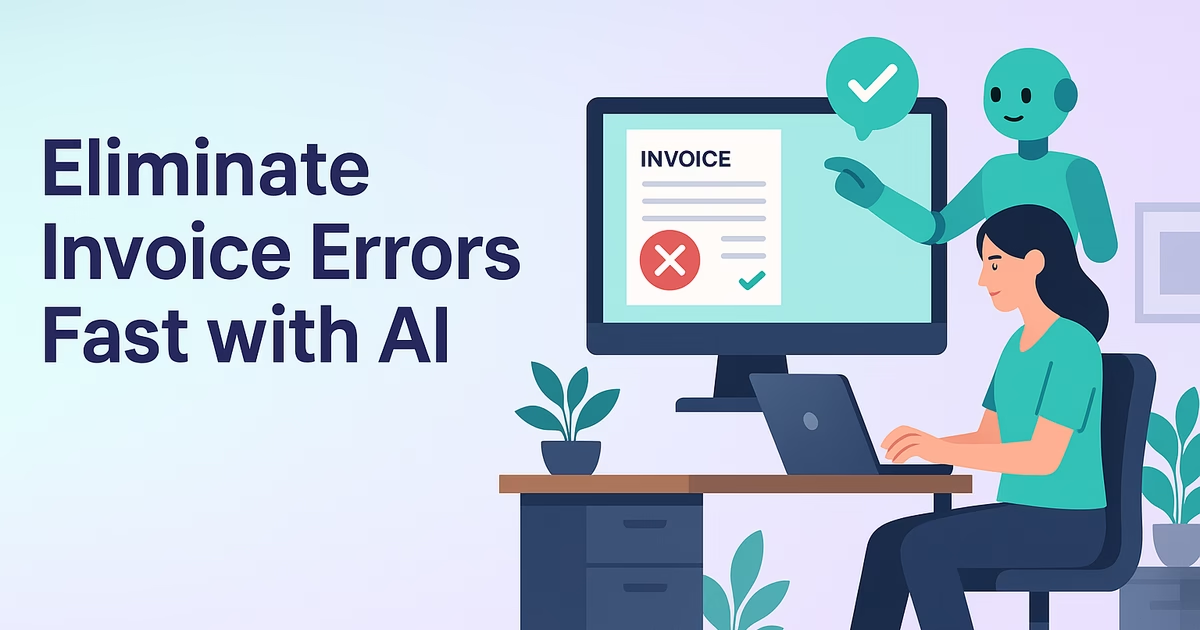
Invoice mismatches can halt payments, strain supplier relationships, and bury AP teams in tedious rework. Imagine transforming this friction into a touchless workflow where 95% of exceptions are resolved automatically. With ProcBay, invoice mismatches no longer mean delays—turn exceptions into touchless approvals and empower your AP team to reclaim time, cash, and control.
In this blog, you will learn why most exceptions happen, how to design discrepancy resolution workflows that fix them automatically, and the exact levers high-performing finance teams use to reclaim time, cash, and spend visibility.
Why Invoices Derail and the Hidden Cost of Each Exception
Every mismatch starts small a typo, a missing PO line but the downstream impact is outsized.
- Long Early-pay discounts increase the cost of goods and erode negotiated savings.
- Supplier escalations consume senior bandwidth and damage trust.
- The month-end crunch grows when unresolved exceptions linger in suspense accounts.
- Audit exposure rises because manual workarounds leave gaps in the approval trail.
Most of these root causes fall into four main categories:
- Data discrepancies (price, quantity, tax).
- Missing or invalid PO references.
- Policy breaches (non-PO spend, split orders).
- Timing lags (goods received after the invoice is issued).
Understanding these categories is crucial, as each one requires different automated variance handling rules.

Map a High-Efficiency Discrepancy Resolution Workflow
Touchless processing isn’t accidental; it follows a clear blueprint.
Step 1 – Digital capture
- Structured intake converts submissions from email, EDI, or portals into usable data.
- Field validation at entry catches blank cost centers before the record is created.
Step 2 – PO-invoice reconciliation
- A Three-way match checks price/quantity against PO and receipt in seconds.
- Tolerance bands auto-approve harmless discrepancies, and thresholds align with materiality.
Step 3 – Exception routing
- Role-based rules send price variances to category managers, tax issues to controllers.
- SLA timers nudge approvers and automatically escalate unresolved items.
Step 4 – Continuous learning
- Feedback loops log root causes (e.g., missing PO, price update needed, duplicate) to refine policies.
- Dashboard visibility highlights chronic issues and helps procurement renegotiate or retrain.
When each step is system-driven, manual intervention is significantly reduced, and cycle times are shortened.
Automated Variance Handling Beyond Three-Way Matching
Most enterprise suites stop at classic 3-way matching, but mismatches rarely obey simple math. Leading AP teams extend logic to n-way intelligence:
- Contract cross-checks verify special pricing or volume discounts not stored on the PO.
- Delivery documents confirm partial shipments, allowing quantity tolerances to flex intelligently.
- Tax engines apply jurisdiction rules in real-time to avoid under- or overpayment.
Automation significantly reduces invoice exception rates, freeing finance talent for analysis instead of firefighting (Rillion, 2023). The key is using configurable variance rules—tighter for high-risk spending, looser for routine supplies—so the system doesn’t create bottlenecks.
To optimize these rules, you should:
- Identify historical variance spread by category.
- Align monetary thresholds with financial materiality.
- Revisit quarterly; tighten rules where over-payments slip through, relax where rework is high.
Exception Prioritization Framework—Fix What Matters First
A minor tax rounding error shouldn’t hold up a large machinery payment. Implement a scoring model to prioritize exceptions effectively based on:
- Financial impact: The absolute dollar variance.
- Supplier criticality: Is the supplier single-source or strategic?
- Compliance sensitivity: Is there a government contract or regulated material involved?
This model allows you to assign a weighted score to each exception, then let the system automatically rank the queue. Controllers can then focus on top-tier exceptions, while the rest can be sent to self-service portals or auto-closure rules.
Mini-Table: Sample Scoring Model
| Dimension | Weight | Example Driver |
|---|---|---|
| Financial impact | 40 % | Variance vs. PO |
| Supplier criticality | 25 % | Tier-1 vs. spot buy |
| Compliance | 25 % | Regulated spend flag |
| Aging | 10 % | Days passed SLA |
Turn Resolution Data into Strategic Spend Visibility
A resolved exception is insight in disguise. When you analyze your variance data, procurement leaders can uncover new ways to improve.
- Negotiate smarter by flagging chronic price drift with specific vendors.
- Refine catalogs after spotting repeated errors in the unit of measure.
- Improve forecasts by understanding the typical time between receiving goods and getting an invoice.
- Strengthen policy by linking increases in non-PO spending to specific departments.
These improvements don’t require specialized tools. The key is to capture and categorize every exception at scale and then display the trends on self-service dashboards.
How Procbay Accelerates 95% Touchless Resolution
While you could build these systems manually, most enterprise teams don’t have the IT resources to do it. Procbay offers a pre-configured solution that helps you:
- Learns your rules with no-code templates. This allows your finance team to easily adjust tolerance levels without relying on IT.
- Extends n-way matching to include contracts and delivery notes. All without custom coding.
- Prioritizes automatically using a built-in weighted scoring model. This ensures only 5% of invoices are sent for human review.
Because the platform logs every action in an unchangeable audit trail, your controllers can go into audits feeling confident and prepared.
Seamless Ecosystem Integration
The solution integrates with major ERP systems like SAP, Oracle, and Microsoft Dynamics using certified connectors. This ensures that your data stays synchronized and your master records remain the single source of truth.
Objections We Hear—and How Modern Teams Respond
- My data is messy; automation will misfire: Modern capture engines normalize vendor names, tax IDs, and currencies before matching begins. Start with a pilot category to build confidence and trust.
- We can’t afford another system: Exception management savings are immediate – from fewer late fees and faster close—often funding the subscription within a quarter.
- Our approvals are unique: No-code workflow builders mirror any hierarchy and evolve as policies change—no developer tickets required.
Manual invoice exception management drains resources and blindsides budgets. By embedding automated variance handling, smart discrepancy resolution workflows, and rigorous exception prioritization, finance leaders shift from manual firefighting to strategic control.
Ready to see 95 % of mismatches resolved before anyone even notices? Request an ROI assessment from Procbay’s experts today.
FAQs
Q: What is an invoice mismatch?
A: An invoice mismatch occurs when there is a difference between the invoice and supporting documents like purchase orders (PO) or goods receipts. Common mismatches include price, quantity, tax, or missing PO details.
Q: What are the main causes of invoice discrepancies?
A: The most common causes include data discrepancies (price or quantity errors), missing or invalid PO references, policy breaches like non-PO purchases, and timing differences between goods receipt and invoice submission.
Q: How do invoice mismatches impact accounts payable (AP) teams?
A: Invoice mismatches delay payments, increase manual workload, cause supplier disputes, and create audit risks due to inconsistent approval trails.
Q: What is three-way matching in invoice processing?
A: Three-way matching is a process that compares the invoice with the purchase order and goods receipt to ensure accuracy before approving payment.
Q: How can automation reduce invoice exceptions?
A: Automation uses rules, tolerance limits, and AI-driven validation to detect and resolve discrepancies automatically, reducing manual intervention and speeding up invoice approvals.
Connect with our procurement experts to tailor an AI-governed sourcing strategy for your enterprise.
Contact Us