Summary
Vendor ecosystems are growing rapidly, but many organizations still manage supplier risk through disconnected onboarding checks and periodic audits. This fragmented approach often leaves critical risks unnoticed until they disrupt operations or compliance.
A structured Third-Party Risk Management (TPRM) lifecycle helps organizations continuously evaluate and govern vendor risks across the entire relationship. This guide explains how to implement a practical TPRM lifecycle strategy that improves vendor oversight, strengthens compliance, and reduces exposure to third-party risks.
What is the Third-Party Risk Management Lifecycle?
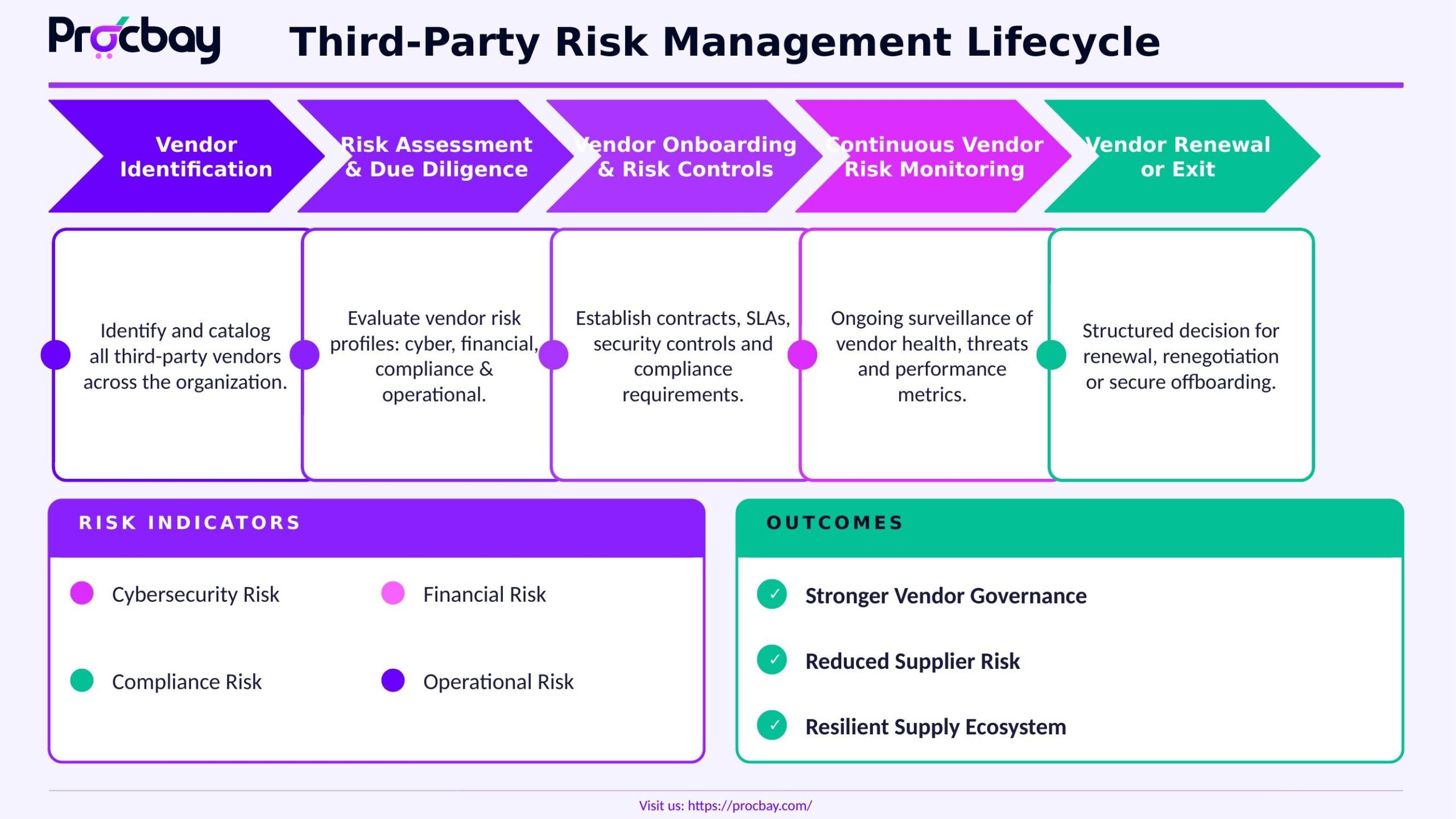
The third-party risk management lifecycle is a structured framework used to identify, assess, monitor, and manage risks associated with vendors throughout the entire supplier relationship.
Instead of treating vendor risk as a one-time compliance check, the TPRM lifecycle integrates risk evaluation across every stage of the vendor engagement process.
A typical TPRM lifecycle strategy includes:
- Vendor identification and risk classification
- Risk assessment and due diligence
- Vendor onboarding and contractual controls
- Continuous monitoring and performance oversight
- Vendor renewal, reassessment, or exit
With effective TPRM lifecycle planning, organizations ensure vendors remain compliant, reliable, and aligned with operational and regulatory expectations.

Why TPRM Lifecycle Planning Matters
Modern organizations operate within increasingly complex vendor ecosystems.
Companies rely on third parties for:
- technology infrastructure
- outsourced operations
- financial services
- supply chain management
However, when vendor risk management is fragmented, organizations face challenges such as:
- Incomplete vendor due diligence
- lack of supplier risk visibility
- compliance failures
- unexpected vendor disruptions
A well-structured TPRM strategy provides a governance framework that enables organizations to manage vendor risks proactively rather than reactively.
Effective third-party risk management lifecycle planning helps organizations:
- Identify supplier risks early
- strengthen regulatory compliance
- maintain operational resilience
- build stronger vendor relationships
Key Stages of the Third-Party Risk Management Lifecycle
1. Vendor Identification and Risk Classification
The TPRM lifecycle begins with identifying potential vendors and classifying them based on risk exposure.
Not all vendors pose the same level of risk. Organizations typically evaluate vendors based on:
- data access levels
- operational dependency
- financial impact
- regulatory exposure
Vendors that handle sensitive information or support critical operations usually require deeper risk assessments.
Early risk classification ensures that high-risk vendors receive stronger due diligence during onboarding.
2. Vendor Risk Assessment and Due Diligence
Once vendors are identified, organizations perform detailed risk assessments.
This stage of the TPRM lifecycle strategy evaluates whether a vendor meets the organization’s governance and compliance standards.
Common risk assessment activities include:
- vendor security questionnaires
- financial stability checks
- regulatory compliance validation
- cybersecurity posture assessment
- sanctions and watchlist screening
Automating vendor risk assessments significantly improves consistency and reduces onboarding delays.
Did You Know?
59% of organizations have experienced a data breach caused by a third-party vendor.
Ponemon Institute – Data Risk in the Third-Party Ecosystem Study
3. Vendor Onboarding and Risk Controls
After completing due diligence, organizations onboard vendors while embedding risk governance controls within contracts and policies.
Key onboarding controls include:
- service level agreements (SLAs)
- regulatory compliance requirements
- data protection agreements
- contractual risk clauses
These controls ensure vendor obligations are clearly defined and enforceable throughout the relationship.
Organizations often integrate vendor onboarding with vendor lifecycle governance processes.
4. Continuous Vendor Risk Monitoring
Vendor risk is not static. Financial health, compliance posture, and cybersecurity exposure can change over time.
A strong TPRM lifecycle strategy includes continuous monitoring mechanisms such as:
- vendor risk score updates
- SLA performance tracking
- compliance certificate renewals
- periodic vendor audits
Continuous monitoring enables organizations to detect vendor risks early and respond before disruptions occur.
Modern procurement and risk platforms automate these monitoring workflows to improve governance visibility.
5. Vendor Renewal or Exit Strategy
The final stage of the third-party risk management lifecycle evaluates whether the vendor relationship should continue.
Before renewing contracts, organizations reassess vendors based on:
- performance against SLAs
- compliance adherence
- cost competitiveness
- risk exposure changes
If a vendor fails to meet risk or performance expectations, organizations may initiate a structured vendor exit strategy.
This ensures the supplier ecosystem remains resilient and aligned with business objectives.
|
“Effective enterprise risk management requires organizations to understand and manage risks across their entire business ecosystem.” — James Lam, Risk Management Expert and Author of Enterprise Risk Management |
Best Practices for Implementing a TPRM Strategy
Centralize Vendor Risk Data
Vendor risk data should be managed within a centralized governance system. This improves visibility across contracts, compliance records, and performance metrics.
Automate Vendor Risk Assessments
Manual questionnaires slow down vendor onboarding and increase the risk of inconsistent evaluations.
Automated workflows standardize vendor assessments and improve audit traceability.
Align Procurement and Risk Governance
Vendor risk management should involve cross-functional collaboration between procurement, IT security, compliance, legal, and finance teams.
Enable Continuous Risk Monitoring
Organizations should implement automated alerts and vendor risk scoring models to detect supplier risks early.
Integrate TPRM with Procurement Strategy
Vendor risk governance should align with broader procurement initiatives such as strategic sourcing and supplier performance management.
Organizations building structured sourcing governance can explore the Strategic vs Tactical Sourcing Guide.
The Role of Technology in TPRM Lifecycle Management
Managing vendor risk manually becomes increasingly difficult as supplier ecosystems expand.
Modern procurement platforms enable scalable TPRM lifecycle management through:
- automated vendor risk assessments
- centralized compliance documentation
- continuous vendor monitoring
- supplier performance analytics
Organizations often combine TPRM frameworks with supplier lifecycle management practices to strengthen overall vendor governance.
Conclusion
As organizations rely more on external vendors, third-party risk exposure continues to grow.
Managing these risks requires more than occasional vendor assessments. It requires a structured TPRM lifecycle strategy that governs vendor relationships from onboarding to exit.
By implementing a comprehensive third-party risk management lifecycle, organizations can:
- strengthen compliance governance
- improve vendor visibility
- detect supplier risks early
- build a more resilient supplier ecosystem
Platforms like ProcBay help operationalize these governance practices by centralizing vendor onboarding, risk assessments, and supplier lifecycle monitoring within a unified procurement platform.
FAQs
Q: What is the TPRM lifecycle?
A: The TPRM lifecycle is the structured process of identifying, assessing, monitoring, and managing risks associated with third-party vendors throughout their relationship with an organization.
Q: Why is a TPRM strategy important?
A: A TPRM strategy helps organizations proactively manage vendor risks, ensure regulatory compliance, and reduce operational disruptions caused by third-party suppliers.
Q: What are the stages of the third-party risk management lifecycle?
A: The third-party risk management lifecycle typically includes vendor identification, risk assessment, onboarding, continuous monitoring, and vendor renewal or exit.
Q: Who manages third-party risk in an organization?
A: Third-party risk management typically involves collaboration between procurement teams, compliance officers, IT security teams, and risk management departments.
Q: How can organizations improve their TPRM lifecycle management?
A: Organizations can improve TPRM governance by implementing centralized vendor risk platforms, automating assessments, and continuously monitoring supplier performance and compliance.
Connect with our procurement experts to tailor an AI-governed sourcing strategy for your enterprise.
Contact Us