Late-stage involvement, endless email approvals, and surprise invoices are draining budgets and patience across your intake-to-pay flow. Imagine a rulebook that enforces itself, approvals route instantly, maverick spend is blocked in real time, and every audit question is answered with two clicks. Procurement automation already delivers up to 50% faster cycle times (Deloitte, 2025), proving the payoff is real. In the next few minutes, you’ll learn how a modern procurement policy framework, backed by automated policy management, eliminates manual friction and puts Finance, IT, and Procurement on the same strategic page.
Why Legacy Policy Frameworks Stall
Most enterprises still rely on PDFs, SharePoint folders, and tribal knowledge to govern procurement. The result is a patchwork of exceptions and manual checkpoints that:
- Create blind spots – Shadow purchasing circumvents negotiated contracts, eroding volume discounts and compliance.
- Slow the P2P cycle – Stakeholders wait days for legal or finance sign-off because no one knows the rules’ latest version.
- Over-burdened experts – Strategic category managers spend hours chasing policy violations instead of optimizing category strategies.
- Complicated audits – When auditors request proof of a three-way match, teams dig through inboxes and spreadsheets.
The takeaway: a static policy document can’t keep pace with today’s cloud apps, SaaS subscriptions, and agile business models.

Anatomy of a Modern Custom Policy Engine
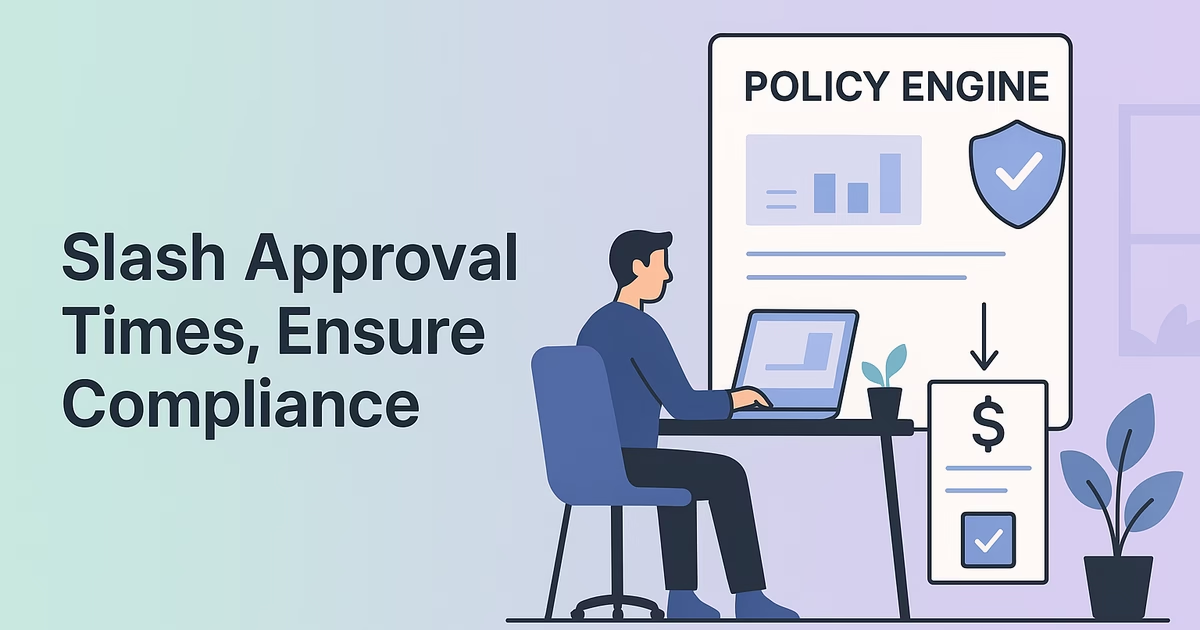
A custom procurement policy engine software embeds your rulebook directly into the transactional workflow, turning policies from passive guidelines into active, automated controls. Core components include:
- Decision matrix – Maps spend type, amount, geography, and risk to the correct approvers and documentation.
- Real-time validation – Confirms budget availability, supplier status, diversity credentials, and contract coverage before a request progresses.
- SLA-based workflows – Escalates approvals automatically if time thresholds are exceeded, reducing bottlenecks.
- Continuous audit trail – Captures every field change, approval, and comment for instant evidence.
Pro Tip: Start with your highest-risk categories (e.g., SaaS, marketing services) to demonstrate quick wins while socializing broader automation.
Building Your Procurement Rulebook in 5 Structured Steps
Governance Charter: Define ownership across Legal, Finance, IT, and Procurement. Establish a steering committee that sets policy objectives, risk appetite, and update cadence.
Policy Mapping Inventor: Existing rules, thresholds, and regional nuances. Identify redundancies and gaps, especially where local business units created “shadow” policies.
Engine Configuration Translate each rule into machine-readable logic: IF spend > $50K AND category = “Professional Services” THEN route to CFO + Legal. Leverage policy automation tools for organizations that support versioning and scenario testing before go-live.
Pilot & Iterate: Select one business unit or category. Track cycle time, approval latency, and policy violation frequency. That same Deloitte study reports procurement automation cuts cycle time in half for early adopters (Deloitte, 2025), so align KPIs accordingly.
Enterprise Roll-out: Expand coverage, integrate with ERP, CLM, and supplier portals, and embed change-management communications. Schedule quarterly rule reviews to keep pace with new regulations and business models.
Technology Evaluation Checklist
Before choosing a platform, validate these criteria against your requirements:
- Configurability without code – Business users should adjust thresholds or approvers without IT tickets.
- Scalable architecture – Supports global entities, multiple ERPs, and high transaction volumes.
- Integration flexibility – Pre-built connectors or robust APIs for intake, sourcing, AP, and analytics.
- Granular audit logging – Tamper-proof logs aligned to SOC 2 Type II and ISO 27001 standards.
- Advanced analytics – Dashboards that highlight policy exceptions, SLA breaches, and potential savings leakage.
- Role-based UX – Requesters see simplified forms; approvers receive contextual risk cues.
- Testing sandbox – Clone production data to trial new rules without disrupting live transactions.
Business Case & Metrics That Resonate with Finance and IT
Moving to automated policy management isn’t just about compliance; it’s about cash and capacity:
- Faster working-capital turns – Shorter P2P cycles accelerate supplier payments that unlock early-pay discounts.
- Resource reallocation – Category managers regain bandwidth to renegotiate contracts, yielding measurable savings.
- Reduced audit fees – A clean, searchable audit trail minimizes external auditor hours.
- Hard stop on maverick spend – Requests outside approved suppliers are flagged instantly, protecting negotiated rates.
Watch Out: Over-engineering rules in the first rollout can create new friction. Start with broad guardrails, measure adoption, then layer granular controls.
Neutral Deep Dive: Integrating a Policy Engine With Existing Systems
Because most enterprises already run SAP, Oracle, or Workday, any policy framework for procurement must plug into existing finance and supplier data. Best-practice architecture involves:
- Middleware or iPaaS to normalize data formats across ERPs and source-to-contract tools.
- Real-time API calls for budget checks and supplier risk scores.
- Event-driven triggers that push exceptions to collaboration tools like Microsoft Teams or Slack.
Done right, the engine becomes the single source of truth for purchasing rules, while master data stays in its system of record.
Where Procbay Fits In
Procbay’s custom procurement policy engine software is designed for enterprises that need pixel-perfect control without months of coding. Customers activate:
- Unified intake-to-pay governance – One rule set drives sourcing, contracting, and invoicing.
- Dynamic simulations – “What-if” testing shows how changing a dollar threshold will affect cycle times before you deploy it.
- Cross-system visibility – Out-of-the-box connectors surface policy exceptions inside your ERP and BI tools.
Many clients report they “finally moved away from spreadsheets and email chains,” freeing the team to focus on strategic supplier partnerships.
Next Steps
Ready to replace static PDFs with living, breathing policy automation tools for organizations of your scale? Schedule a 30-minute strategy session with a Procbay solution architect to map your first automated workflow, outline ROI benchmarks, and see a live demo of rules firing in real time.
Whether you choose Procbay or another vendor, a robust procurement policy framework backed by automated policy management is no longer a nice-to-have; it’s the backbone of modern governance. Close the article, open your rulebook draft, and envision a future where compliance is continuous, approvals are swift, and spend visibility is absolute. That’s the promise of a well-built policy framework for procurement, and your organization is one decision away from realizing it.
Connect with our procurement experts to tailor an AI-governed sourcing strategy for your enterprise.
Contact Us