Harsh Singhi
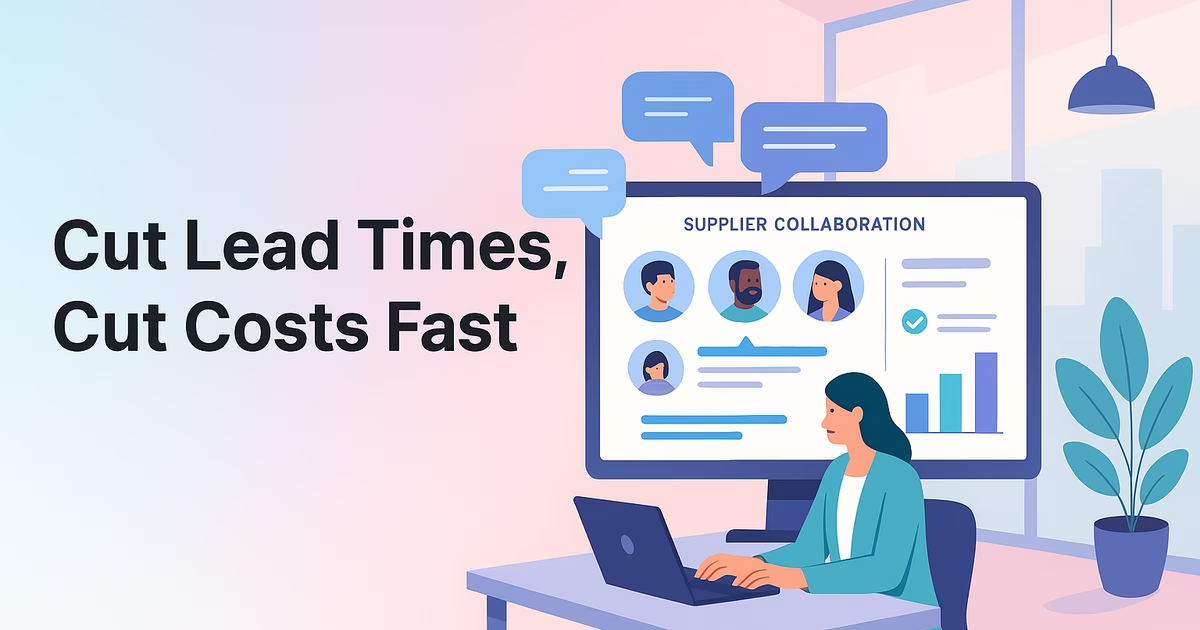
Late approvals, endless email threads, and surprises at the dock are draining cash flow and patience across the P2P cycle. Imagine cutting days – or even weeks – off every order by getting buyers and suppliers on the same page, in real time. Buyers on a supplier collaboration portal to reduce lead times cut direct-materials PO workload by more than 25% in 2023 (SourceDay, 2023).
In the next few minutes, you will see exactly how a modern supplier communication system works, the measurable business impact, and a practical step-by-step transition plan to upgrade vendor collaboration without derailing your existing ERP investments.
Why Friction in Supplier Collaboration Is Costing You, And What Changes
CFOs, CIOs, and procurement leads all recognize the same choke points:
- Manual hand-offs: When RFQs, POs, and ASN updates bounce between email, phone, and siloed systems, cycle times stretch and errors multiply.
- Shadow and Maverick Spend: Stakeholders bypass procurement because “it takes too long,” jeopardizing audit trail integrity.
- No real-time visibility: By the time delays show up in ERP, options are limited to expediting fees and firefighting.
- Supplier confusion: Vendors juggle different document formats, duplicate data entry, and unclear SLA expectations.
These frictions raise inventory buffers and working capital. Netstock reports that firms deploying lead-time reduction strategies typically cut inventory holding costs by 15–30% (Netstock, 2023). The fastest lever? Centralize collaboration in supply chain workflows through a supplier collaboration portal to reduce lead times that all parties use from requirement intake to pay. This approach can significantly reduce lead times.
Spend Smarter. Grow Faster.
Gain control of expenses and boost efficiency with Procbay.
Turning Chaos Into Control: How Supplier Portals Transform Procurement
A supplier collaboration portal is a secure, cloud-based workspace that connects buyers and suppliers with the same data, tasks, and timelines. Here’s how the right vendor portal works.
Real-Time Order Commits
Supplier collaboration portal vendors confirm quantity, price, and promise date directly in the PO line item. Automated alerts flag any deviations so buyers can act before a line goes late.
Intake-to-Pay Automation
Integrated supplier collaboration portals push approved POs to ERP, surface ASN data for warehouse planning, and trigger three-way match after the invoice lands. No rekeying, no confusion between versions.
SLA-Based Workflows
Clock-driven reminders keep acknowledgments, ship notices, and quality docs inside agreed-upon windows, creating an audit trail that finance can trust using a supplier collaboration portal.
Data-Driven Vendor Collaboration
Dashboards rank suppliers on on-time delivery, responsiveness, and quality. You move from anecdotal finger-pointing to evidence-backed conversations with a vendor management platform and supplier communication system.
Table 1: Manual Collaboration vs. Portal-Driven Model
| Feature | Email/Spreadsheet | Supplier Collaboration Portal | Impact on Lead Time |
|---|---|---|---|
| Order acknowledgment | Ad-hoc emails | One-click in-portal commit | Days faster, no chasing |
| Change requests | Hidden in threads | Logged, version-controlled | Instant visibility |
| Document sharing | Attachments, duplicates | Central repository with permissions | Eliminates rework |
| SLA tracking | Manual reminders | Automated countdown timers | Prevents last-minute expedites |
| Audit trail | Scattered | Immutable, searchable | Compliance-ready |
The table shows why portals consistently beat legacy tools: they remove guesswork and surface exceptions while there is still time to act.
Pro Tip: Tie portal milestones to the same KPIs already in your executive dashboard: cash conversion cycle, inventory turns, and cost of goods sold. That alignment speeds up collaboration in supply chain and support buy-in across finance and operations.
The Strategic Vendor Collaboration Framework
The key is disciplined change. Use the five-step framework below to guide adoption with minimal disruption.
- Define measurable goals: Set a baseline for current lead times, on-time-in-full (OTIF), and manual touchpoints. Aim for numeric targets, like a “cut average lead time of 20%.”
- Segment suppliers for phased rollouts: Prioritize high-volume or high-risk vendors, who feel the pain most. Early wins build momentum.
- Map the intake-to-pay process: Document every hand-off from requisition to a three-way match, and identify gaps where the portal will insert automated checks or SLA timers.
- Integrate with existing ERP/P2P stack: Use APIs or flat-file connectors to sync master data and transaction status. CIO teams should validate security, SSO, and data-residency needs upfront.
- Govern and optimize: Hold quarterly reviews with suppliers to analyze dashboard metrics. Adjust SLA thresholds, expand to indirect categories, and drive continuous improvement.
Follow this recommended sequence: skipping a step can risk user fatigue or integration surprises. But by maintaining discipline, you ensure vendors stay engaged and the right tools fit the existing business infrastructure.
Simplify Procurement. Accelerate Growth.
Procbay’s AI streamlines requests, approvals, and vendors, so you save time and scale faster.
Proof Points: Measurable Outcomes from Portal Adoption
When technology replaces manual hustle, results surface quickly:
- PO Workload Down 25%+: Buyer at a mid-market electronics firm used a portal similar to Procbay’s to eliminate back-and-forth emails (SourceDay, 2023).
- Inventory Holding costs Cut by as much as 30%: Shorter and more reliable lead times let planners trim safety-stock buffers (Netstock, 2023).
- Cleaner Audit Trail: All PO changes are time-stamped in a single system of record, easing month-end close and compliance checks.
These gains flow straight to EBITDA and free cash flow, the language your CFO and board easily recognize and directly linked to strong vendor collaboration.
Your Action Checklist: Fast-Track Lead Time Reduction
- Benchmark today: Capture current lead time, OTIF, and manual touch counts.
- Secure C-level sponsorship: Align portal ROI with strategic goals, including working-capital improvement, risk mitigation, and spend visibility.
- Select platform criteria: Real-time collaboration in supply chain workflows, SLA timers, and ERP connectors are crucial.
- Pilot & refine: Start with a focused supplier cohort; iterate on onboarding materials and training.
- Scale and govern: Expand categories, embed KPIs in performance reviews, and update policies to mandate portal usage.
Slowly, steadily, and by sticking to this recommended list, the transition from chaos to control will feel far less overwhelming.
Frequently Asked Questions
Q: How quickly can supplier portals impact lead times?
A: Most teams see acknowledgment and change order cycle times drop significantly, within the first 30–60 days, because communication shifts from email lag to real-time portal commits.
Q: What are the core features to demand in a supplier communication system?
A: Must-haves include bidirectional PO collaboration, SLA-based alerts, document repository, analytics dashboards, API/EDI connectors, and robust user permissions for audit readiness.
Q: How do portals drive compliance and audit trail improvement?
A: Every action, PO issue, supplier commit, change, and ASN upload is time-stamped and immutable, giving finance complete confidence with a full three-way match for external audits.
Q: What challenges should I expect during portal integration?
A: Expect data-mapping quirks with legacy ERPs and change-management pushback from suppliers worried about “another system.” A phased rollout and clear training solutions resolve most issues.
Q: How do these solutions help prevent maverick or shadow spend?
A: By centralizing requests and approvals in the same workspace, stakeholders lose the excuse that “procurement takes too long.” Visibility and policy-based routing curb off-contract buying.
Ready to Accelerate?
Procurement leaders who act now will capture speed, cash, and compliance advantages that their competitors can’t match. Procbay’s supplier collaboration portal combines intake-to-pay automation with SLA workflows, giving enterprises both speed and governance in a single platform. Schedule a 30-minute strategy session to calculate how much lead time and working capital you can unlock this quarter.
Reclaim control, cut friction, and watch your supplier collaboration portal to reduce lead times and turn operational delays into a strategic advantage with improved vendor collaboration and streamlined collaboration in supply chain.
Related Articles
Strategic Sourcing vs Tactical Sourcing: Key Differences
Procurement leaders today face a dual challenge. They must deliver immediate cost control while building long-term supplier...
Read more
Boost Efficiency with Workflow Agents in Business
Summary: As procurement operations expand, the number of approval layers, supplier checks, and compliance requirements also increases....
Read more
Strategic Procurement Process: Step‑by‑Step Guide
Summary A properly organized strategic procurement process integrates procurement with business objectives, cuts costs, and builds better...
Read more