Harsh Singhi
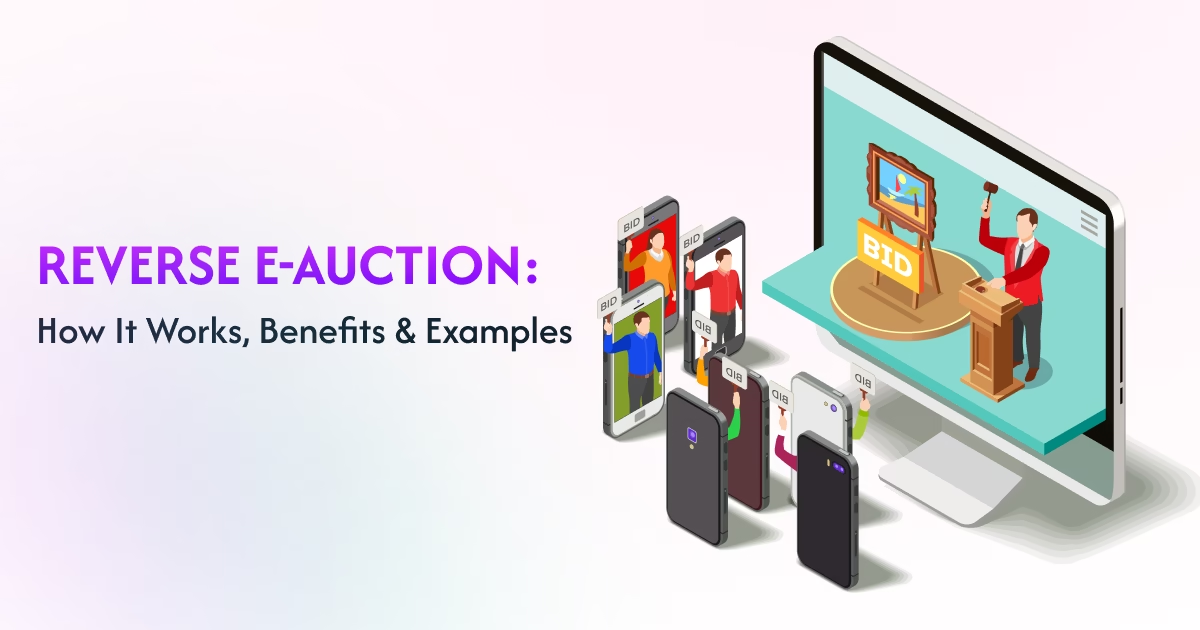
A reverse e auction is a tool that uses technology to help organizations purchase goods and services. Unlike traditional auctioning, in a reverse auction, it is the supplier who reduces prices in real time. Such a technique helps make the purchase activity fast, transparent, and just. Some of the sectors that are most benefited by reverse e auctioning are the manufacturing industry, information and communication technology, infrastructure, and energy. As businesses adopt digital tools, electronic reverse auctions are becoming an important part of modern procurement strategies.
In this blog, we will see how reverse e auction is performed, the benefits they provide, and some examples of organizations using reverse e auctions to reduce costs and boost efficiency. It contains the e auction process, right platform, and future trends in procurement.
Did You Know?
Companies using reverse e auctioncan save 5–20% on procurement costs on average. Digital sourcing reduces procurement cycle times by up to 30%, improving overall efficiency.
Spend Smarter. Grow Faster.
Gain control of expenses and boost efficiency with Procbay.
Reverse e-Auction Process: A Clear Stepwise Approach
The reverse e-auction process is organized and straightforward. It ensures that buying is clear, quick, and fair.
Key steps include:
- Requirement finalization: Buyers provide clear details about their needs, quantities, and timelines.
- Supplier qualification: Only qualified and approved suppliers are invited to bid.
- Auction setup: Rules, time limits, and ranking systems are set up online.
- Live bidding: Suppliers submit lower prices in real time.
- Post-auction review: Bids are reviewed, and the top supplier is selected based on price and quality.
This structure cuts down sourcing time and ensures complete transparency in all bidding rounds.
Advantages of Electronic Reverse Auctions for Procurement
Financial savings is not the only thing that an electronic reverse auction brings to the table. It has several advantages for businesses:
- Real-time transparency: All bids are instantly visible, thus eliminating the possibility of bias and side deals.
- Increased supplier competition: More suppliers can participate, driving better pricing and value.
- Higher accountability and compliance: The automated tracking guarantees sticking to the contract rules.
- Standardized procurement: This practice makes sure that all a company’s departments or units will be treated in the same way.
- Records available for auditing: Histories of digital bids are stored for future reference.
- Supplier confidence & trust: Clear rules and fair competition improve supplier relationships.
- Faster and more reliable procurement: Reduction in the sourcing and an improvement in the overall effectiveness of planning.
Did You Know?
Over 70% of enterprises now prefer electronic reverse auctions for standardised procurement and transparency. Using a trusted reverse auction platform increases supplier participation and competitive pricing.
Simplify Procurement. Accelerate Growth.
Procbay’s AI streamlines requests, approvals, and vendors, so you save time and scale faster.
Reverse Auction Platform: What Enterprises Should Look For
A reliable reverse auctioning platformis crucial in conducting successful online auctions. The site will ensure that bidding is accurate and traceable.
Features to look for:
- Real-time bidding and analytics to track live results
- Reliable infrastructure for protecting confidential data
- ERP Integration for Interacting with Company Systems
- Flexible auction formats for different categories
- Supplier Enablement Tools for Increasing participation
The type of platforms that have dashboards and have automation capabilities tend to have better results. Security, reliability, and usability also must be considered for long
Reverse e-Auction Use Cases in Different Industries
The e-procurement reverse auction is used in industries where requirements are clear and competition is healthy.
| Industry | Category | Average Cost Savings |
| Manufacturing | Raw Materials | 8–15% |
| Infrastructure | Project Services | 6–12% |
| IT & Telecom | Hardware & Services | 10–18% |
Manufacturing organizations use it for components and materials. Infrastructure organizations use it for project-related services. IT organizations conduct reverse auctions for hardware, software, and managed services. From the above findings, reverse auctions help organizations save costs while ensuring quality.
The Role of Reverse e-Auction in Digital Transformation
Digital transformation objectives are supported by the electronic reverse auction procurement method. It increases compliance, decreases errors, and saves time. Future purchase planning is aided by automated analytics. Digital procurement teams produce more value than traditional teams, according to studies. AI will be used in future auctions to forecast bid patterns and incorporate sustainability considerations. Digital auctions are evolving from a cost-saving technique to a strategic tool.
Procbay: Setting Standards in Digital Auctions
Procbay assists organizations in organizing reverse e auction events successfully. It enables complex sourcing with compliance with rules in place. Through clear dashboards, Procbay increases participation and outcomes. The solution assists in time saving, cost effectiveness, and ensuring all aspects are transparent.
Conclusion: Maximizing Value with Reverse e-Auctions
Reverse e-auction is a necessity for companies wanting to update their procurement practices. Cost savings and a quicker procurement process are what companies will now get through reverse e-auctions. The only requirement is to adopt these changes and adapt to reverse e-auctions to build a successful procurement system.
By using the trusted reverse auction platform, businesses can make procurement a source of differentiation and strength instead of mere transactional tasks. Schedule a demo with Procbay to experience procurement metamorphosis for yourself. Digital auctions go beyond optimizing costs and build better supplier relationships.
FAQs
Q: What is a reverse e auction?
A reverse e auction is a digital method where suppliers compete by offering lower prices, making procurement faster, fair, and transparent.
Q: How does the reverse e auction process work?
The reverse e auction process captures all bids digitally, applies rules automatically, and generates audit-ready results.
Q: What makes a good reverse auction platform?
A reverse auction platform is secure, easy to use, and shows live bids. It connects with company systems and provides dashboards to track results.
Q: Which categories are best for digital auctions?
Digital auctions work best for products or services with clear requirements and many suppliers, such as raw materials, IT hardware, logistics, and recurring services.
Q: Do digital auctions affect supplier relationships?
Transparent rules and equal competition improve fairness and trust, leading to long-term supplier partnerships.
Related Articles
Strategic Sourcing vs Tactical Sourcing: Key Differences
Procurement leaders today face a dual challenge. They must deliver immediate cost control while building long-term supplier...
Read more
Boost Efficiency with Workflow Agents in Business
Summary: As procurement operations expand, the number of approval layers, supplier checks, and compliance requirements also increases....
Read more
Strategic Procurement Process: Step‑by‑Step Guide
Summary A properly organized strategic procurement process integrates procurement with business objectives, cuts costs, and builds better...
Read more