Harsh Singhi
Introduction: Understanding Reverse Auctions
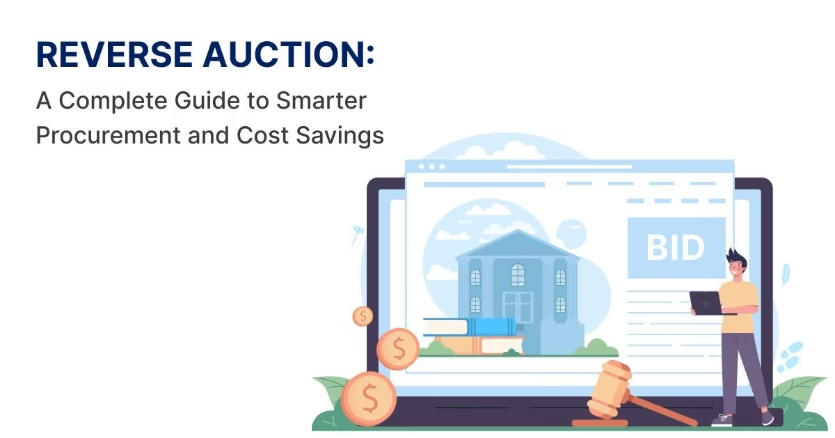
Many businesses face problems when acquiring or buying products and services. Traditional procurement is a long process that requires negotiation and is not transparent, allowing businesses to end up overpaying and suffering poor selection of suppliers. Reverse Auctions address these problems by allowing suppliers to decrease the price of the bid, hence increasing transparency and eliminating manual work.
In this blog post, we’ll explore how they work, what the step-by-step process entails, the advantages of the tool, and how businesses can leverage reverse auction platforms online in an effort to make informed purchasing decisions. By the end of this post, you’ll know how reverse auctions save businesses time and money.
Why Companies Are Turning to Reverse Auctions
Organizations implement reverse auctions to handle important procurement issues, including slow procurement processes, poor price transparency, or inequitable supplier assessment. In reverse auction procurement, competitors bid simultaneously, which assists in determining reasonable prices.
The latest technology platforms have made it possible for an organization to create transparency and record every process for compliance. The procurement department is able to minimize the cycle time, increase supplier engagement, and enhance cost savings without undermining governance. Reverse auction procurement platforms are a trustworthy and feasible option for high-volume and repetitive procurement.
Did You Know?
Organizations using reverse auctions report average cost savings of 18–20% compared to traditional negotiation-based procurement, especially in high-volume and standardized categories.
Spend Smarter. Grow Faster.
Gain control of expenses and boost efficiency with Procbay.
The Reverse Auction Process: A Step-by-Step Overview
A reverse auction procedure is successful when it follows a structured process. Here’s how it works:
Step 1: Requirement Definition and Scope Finalization
The buyer starts by clearly defining what is being sourced. This includes specifications, quantities, service levels, and delivery timelines. Clear requirements ensure all suppliers bid on the same terms.
Step 2: Supplier Identification and Prequalification
Only suppliers who meet technical, financial, and compliance criteria are invited. This reduces the risk of unrealistic bids and post-award issues.
Step 3: Auction Configuration and Rule Setting
The auction is set up with defined rules such as duration, bid decrements, and visibility. Evaluation criteria are finalized at this stage.
Step 4: Live Auction Execution
Suppliers place bids in real time through a real-time bidding engine while buyers to monitor the event without influencing outcomes.
Step 5: Bid Evaluation and Award Finalization
After the auction closes, bids are evaluated against predefined criteria.
This structured reverse auction process ensures traceability and audit readiness.
How Reverse Auctions Are Different from Traditional Sourcing
With traditional purchasing, suppliers bid separately, which may result in a lack of timely pricing information. Reverse bid auctions involve a simultaneous process where suppliers follow guidelines. In the table below includes the ways technology strengthens reverse auctions:
| Capability | Advantage |
| Automation | Reduces manual effort and speeds up processes |
| Analytics | Provides better insights for informed decisions |
| Dashboards | Enables real-time monitoring of bids and suppliers |
| Integration | Unifies procurement data for transparency and reporting |
These capabilities make Reverse auction services more efficient, scalable, and manageable across categories and regions.
Key Benefits of Reverse Auctions
There are multiple benefits of reverse auction for companies looking to make procurement smarter and more cost-effective. Here are the key benefits:
Cost Savings
Suppliers compete to offer the lowest price, helping companies achieve fair market rates. This often results in significant reductions in procurement costs without compromising quality.
Faster Procurement
Instead of negotiating separately with each supplier over multiple rounds, reverse auctions consolidate the process into a single event. This reduces sourcing cycle time and speeds up decision-making.
Transparency
All suppliers follow the same rules and see the process clearly, which makes bidding fair. Buyers also get a documented record of every step, ensuring accountability.
Better Decision-Making
With real-time bidding data, procurement teams can analyze supplier behavior and prices. This helps make informed decisions based on facts, not assumptions or guesswork.
Compliance and Audit Readiness
Every action during the auction is recorded, making it easy to track decisions and provide proof for internal or external audits.
Improved Supplier Relationships
Clear rules, fair competition, and post-auction feedback help build trust with suppliers. This encourages them to participate in future auctions and maintain high performance.
These benefits combine to make reverse auctions a reliable, efficient, and transparent way to manage procurement while achieving measurable cost and process improvements.
Did You Know?
Reverse auctions can shorten procurement cycles dramatically; sometimes reducing sourcing time from weeks to just hours.
Simplify Procurement. Accelerate Growth.
Procbay’s AI streamlines requests, approvals, and vendors, so you save time and scale faster.
The Role of Technology in Reverse Auction Platforms
Technology plays a central role in making reverse auction platforms efficient and scalable. Modern platforms support automation, analytics, and compliance throughout the sourcing life cycle. These systems help buyers manage supplier communication, enforce bidding rules, and analyze outcomes.
| Capability | Advantage |
| Automation | Reduced manual effort |
| Analytics | Better sourcing insights |
| Dashboards | Faster decisions |
| Integration | Unified procurement data |
Technology ensures reverse auctions remain consistent and manageable across categories and regions.
Managing Supplier Experience and Procurement Risks
Reverse auctions work best when suppliers view the process as fair and transparent. Managing supplier experience is therefore essential.
- Clear Communication and Expectations
Suppliers should understand requirements, rules, and evaluation criteria before bidding begins.
- Supplier Prequalification
Inviting only capable suppliers reduces delivery and quality risks.
- Balanced Evaluation Beyond Price
Including service levels and compliance factors ensures long-term value.
- Price Floors and Bid Controls
Minimum thresholds prevent unsustainable pricing.
- Post-Auction Feedback and Engagement
Feedback helps suppliers improve future participation.
- Governance and Audit Readiness
Digital audit trails enhance compliance and stakeholder confidence.
This structured documentation also simplifies internal reviews, regulatory reporting, and post-event justification of sourcing decisions.
How Procbay Supports Reverse Auction Procurement
The role of Procbay is to ensure that the process of reverse auction procurement within organizations occurs in an organized and transparent manner.
Procbay reverse auction services are centered on providing clarity, compliance, and visibility. The platform is based on a combination of automation and simplification, allowing the procurement team to create a standardized process while maintaining flexibility for the company.
Key Takeaways: Reverse Auctions for Smarter Sourcing
Reverse auctions have become a crucial aspect of the procurement process as they incorporate competition with a structured approach. It is with a proper approach to a specific category and the aid of proper technology that reverse auctions assist companies in attaining cost discipline while being transparent about the process. The reverse auction process of a reverse auction enables teams to make informed decisions regarding sourcing.
With an analytical approach, there can be efficiency, transparency, and enhanced governance. Request for demo with Procbay to understand how a knowledge-based platform can help make more informed procurement decisions.
FAQs: Reverse Auctions
Q: What is a reverse auction?
A: A reverse auction is a process where multiple suppliers compete to offer the lowest price for goods or services, helping buyers save costs and improve transparency.
Q: What are the benefits of reverse auctions?
A: The benefits include cost savings, faster procurement, and improved supplier fairness, making sourcing more efficient and data driven.
Q: How does a reverse auction platform work?
A: A reverse auction platform allows buyers to host online auctions, track bids in real time, and manage supplier participation efficiently.
Q: Which procurement categories suit reverse auctions best?
A: Standardized products, logistics, packaging, and indirect spending are ideal for reverse auctions, while highly customized purchases may need traditional sourcing.
Q: How can companies manage supplier risks in reverse auctions?
A: Supplier risks can be managed by prequalifying vendors, setting up bid floors, and evaluating compliance during the reverse auction process.
Related Articles
Strategic Sourcing vs Tactical Sourcing: Key Differences
Procurement leaders today face a dual challenge. They must deliver immediate cost control while building long-term supplier...
Read more
Boost Efficiency with Workflow Agents in Business
Summary: As procurement operations expand, the number of approval layers, supplier checks, and compliance requirements also increases....
Read more
Strategic Procurement Process: Step‑by‑Step Guide
Summary A properly organized strategic procurement process integrates procurement with business objectives, cuts costs, and builds better...
Read more