Harsh Singhi
Summary
A Vendor Management System (VMS) is software that helps businesses manage vendor onboarding, contracts, performance tracking, and compliance from a single platform. The right vendor management software centralizes supplier data, automates workflows, and gives procurement teams visibility into vendor performance and risk.
When selecting a vendor management platform, organizations should evaluate vendor onboarding capabilities, contract management features, supplier performance analytics, integration with procurement tools, and automation capabilities. A modern VMS vendor management system enables better vendor collaboration, cost control, and procurement efficiency.
Vendor Management Is Getting Harder, Not Easier
Most organizations today depend on dozens, sometimes hundreds of vendors.
But vendor management often still runs through:
- spreadsheets
- email approvals
- disconnected procurement tools
- manual contract tracking
The result?
Procurement teams struggle with:
- slow vendor onboarding
- missed contract renewals
- supplier compliance risks
- lack of performance visibility
As supplier ecosystems grow, these manual processes simply don’t scale.
That’s why companies are increasingly adopting vendor management systems (VMS) to bring structure and control to supplier operations.
A Vendor Management System centralizes supplier data, workflows, and performance insights in one platform, enabling organizations to manage vendor relationships more efficiently through structured supplier lifecycle management platforms.

What Is a Vendor Management System?
A Vendor Management System (VMS) is software that helps organizations manage the full vendor lifecycle management process from vendor discovery and onboarding to contract management, performance monitoring, and renewal.
Instead of managing suppliers through fragmented systems, a vendor management platform creates a centralized environment for:
- vendor onboarding and verification
- vendor contract management
- supplier performance tracking
- compliance and risk monitoring
- supplier collaboration
Modern vendor management software also integrates with procurement systems to automate sourcing and purchasing workflows.
The goal is simple: give procurement teams complete visibility and control over supplier relationships.
Why Businesses Are Investing in Vendor Management Software
Vendor ecosystems are expanding rapidly across industries.
Research shows the vendor management software market is expected to reach nearly $22 billion by 2030, reflecting rapid adoption of digital procurement tools.
Companies are investing in VMS platforms because they help:
- reduce vendor risk
- improve supplier performance
- streamline procurement operations
- automate compliance tracking
- strengthen supplier collaboration
Many organizations are also integrating vendor management tools with structured strategic sourcing processes to improve supplier selection and procurement efficiency.
Without a structured vendor management system, procurement teams often spend more time managing vendors than optimizing them.
Key Features to Look for in a Vendor Management System
Not all VMS systems are created equal. When evaluating the best vendor management software, focus on capabilities that support the entire supplier lifecycle.
| Feature | Why It Matters |
| Vendor onboarding automation | Reduces onboarding time and ensures compliance |
| Vendor contract management software | Centralizes contracts and tracks renewals |
| Supplier performance dashboards | Tracks vendor KPIs and SLAs |
| Risk and compliance monitoring | Ensures regulatory and policy adherence |
| Vendor self-service portal | Improves collaboration and document sharing |
| Integration with procurement tools | Connects sourcing, purchasing, and supplier data |
| Analytics and reporting | Enables data-driven vendor decisions |
A strong vendor management platform should support both operational efficiency and strategic supplier management.
| “Procurement is at the forefront of managing increasing supply market complexity, and successful organizations are investing in digital technologies and AI to drive resilience, efficiency, and growth.”
— Ryan Flynn, Principal, Deloitte |
| Source: supplychain digital |
Steps to Choose the Right Vendor Management Platform
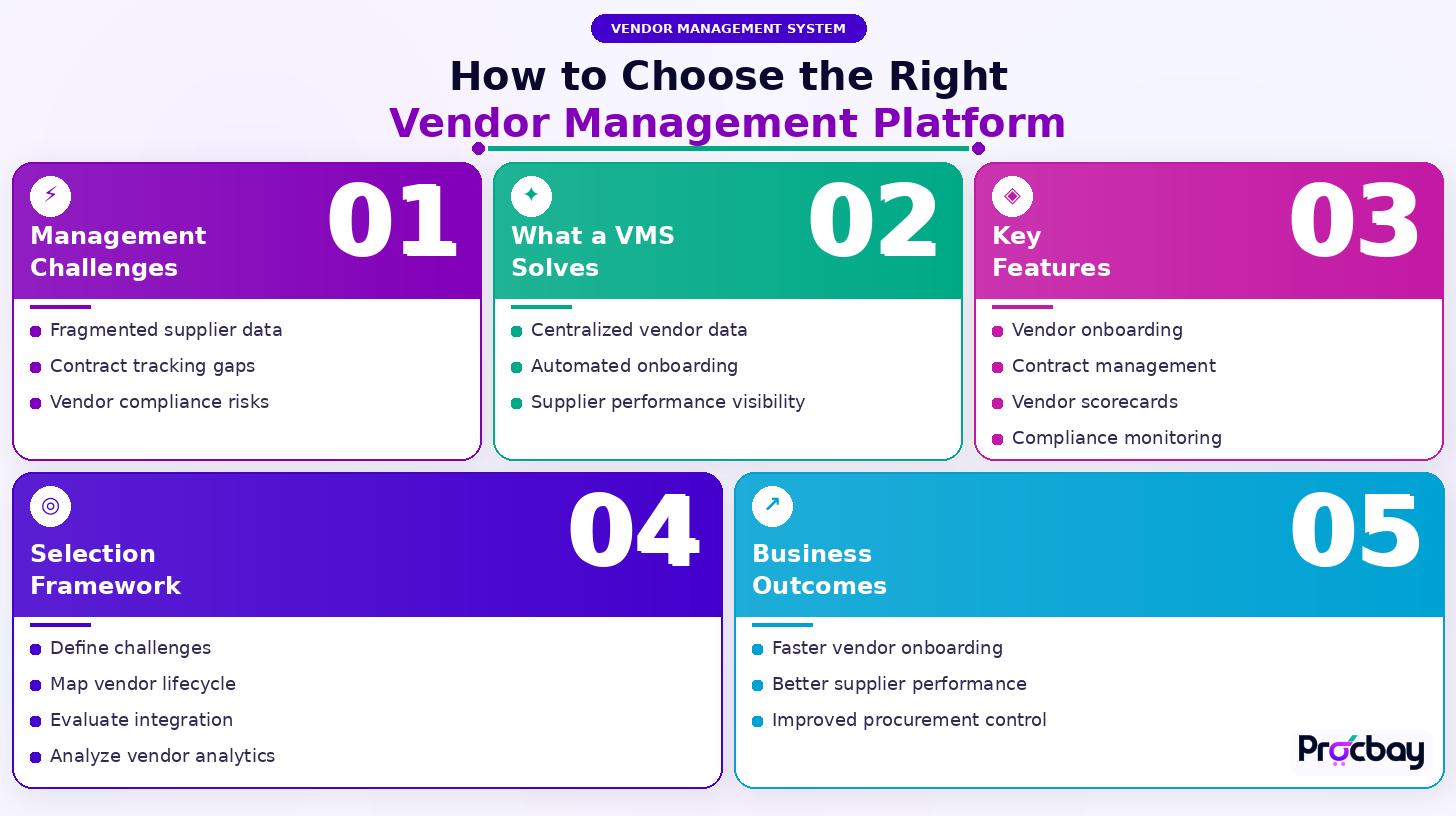
Choosing the right VMS vendor management system requires more than comparing software features.
Here’s a practical framework procurement teams can follow.
Define Your Vendor Management Challenges
Start with the problems you want to solve:
- slow vendor onboarding
- poor supplier visibility
- contract compliance issues
- fragmented procurement systems
Understanding your gaps helps identify the right solution.
Map the Vendor Lifecycle
Your vendor lifecycle may include:
- vendor discovery
- onboarding and verification
- contract management
- performance monitoring
- renewal or termination
Ensure the vendor management system supports every stage.
Evaluate Contract Management Capabilities
Contracts drive vendor accountability.
Look for vendor contract management software features such as:
- centralized contract repository
- automated renewal alerts
- SLA tracking
- compliance monitoring
Assess Integration with Procurement Systems
Vendor management works best when integrated with procurement workflows.
Your vendor management software should connect with:
- sourcing tools
- purchase order systems
- spend analytics platforms
- finance and ERP systems
Integrated procurement ecosystems reduce manual work and improve visibility.
Prioritize Vendor Performance Analytics
The best vendor management platforms don’t just store vendor data, they analyze it.
Look for features such as:
- vendor scorecards
- KPI tracking
- supplier benchmarking
- risk alerts
These insights help procurement teams make better sourcing decisions.
Evaluate Automation and AI Capabilities
Modern procurement platforms increasingly use automation and AI.
AI-driven systems can:
- flag vendor risks
- predict supplier performance issues
- automate supplier onboarding
- recommend sourcing decisions
AI-enabled procurement tools are becoming essential for managing complex supplier networks.
Did You Know? |
| The vendor management software market is projected to reach nearly $22 billion by 2030, driven by increasing supplier complexity and digital procurement adoption. |
This insight highlights an important truth: technology decisions should align with procurement strategy, not just feature lists.
Common Mistakes When Choosing Vendor Management Software
Many organizations rush into vendor software selection and face implementation challenges later.
Avoid these common mistakes:
- Choosing tools without procurement integration
Disconnected systems create data silos. - Ignoring vendor onboarding workflows
Manual onboarding slows supplier collaboration. - Overlooking supplier performance tracking
Without analytics, vendor management becomes reactive.
- Selecting overly complex platforms
Adoption drops when systems are difficult to use.
The best vendor management system balances power with usability.
How Procurement Platforms Like ProcBay Help
Modern procurement platforms go beyond basic vendor databases.
Platforms like ProcBay help procurement teams manage supplier ecosystems through:
- automated vendor onboarding workflows
- centralized supplier lifecycle management
- contract-backed procurement processes
- supplier performance visibility
- AI-enabled procurement execution
By integrating vendor management with sourcing and procurement workflows, organizations gain better control over supplier relationships and spend governance.
Final Takeaway
Choosing the right vendor management system is not just a technology decision, it’s a strategic procurement move.
The right platform should help you:
- onboard vendors faster
- manage contracts efficiently
- monitor supplier performance
- reduce vendor risks
- improve procurement visibility
When supplier data and procurement workflows are centralized, organizations can also unlock stronger procurement cost reduction strategies and long-term supplier value.
As supplier ecosystems grow more complex, businesses that invest in structured vendor management platforms will build stronger, more resilient supply chains.
FAQs
Q: What is a vendor management system (VMS)?
A: A vendor management system is software used to manage supplier onboarding, contracts, compliance, and performance through a centralized platform.
Q: What are the benefits of vendor management software?
A: Vendor management software improves supplier visibility, reduces vendor risk, automates procurement workflows, and enhances supplier collaboration.
Q: What features should the best vendor management software include?
A: Key features include vendor onboarding automation, contract management, performance analytics, compliance tracking, and procurement integrations.
Q: Is vendor contract management software necessary?
A: Yes. Contract management ensures organizations track vendor agreements, monitor SLAs, and avoid missed renewals or compliance issues.
Q: How does a vendor management platform improve procurement?
A: It centralizes supplier data, automates vendor workflows, and enables procurement teams to make data-driven vendor decisions.
Author

Harsh Singhi is a procurement automation SaaS professional with 8 years of experience helping businesses get more value from digital procurement platforms by streamlining procurement workflows, improving vendor collaboration, and simplifying purchasing processes. He writes about practical, technology-driven approaches to improving business efficiency and driving user adoption by aligning technology with real business needs.
Related Articles

Importance of Stakeholders in Procurement Strategy
Summary A procurement strategy is only as effective as the alignment behind it. In a complex global market, a deal...
Read more
Supplier Diversity in Global Supply Chains
Summary: Supplier diversity is the strategic practice of proactively sourcing goods and services from businesses owned and operated by...
Read more
Supply Chain Vendor Management: Strategies to Improve Supplier Performance
Summary Supply chain vendor management is the process of managing vendors that supply goods or services across the supply chain. It...
Read more