Summary
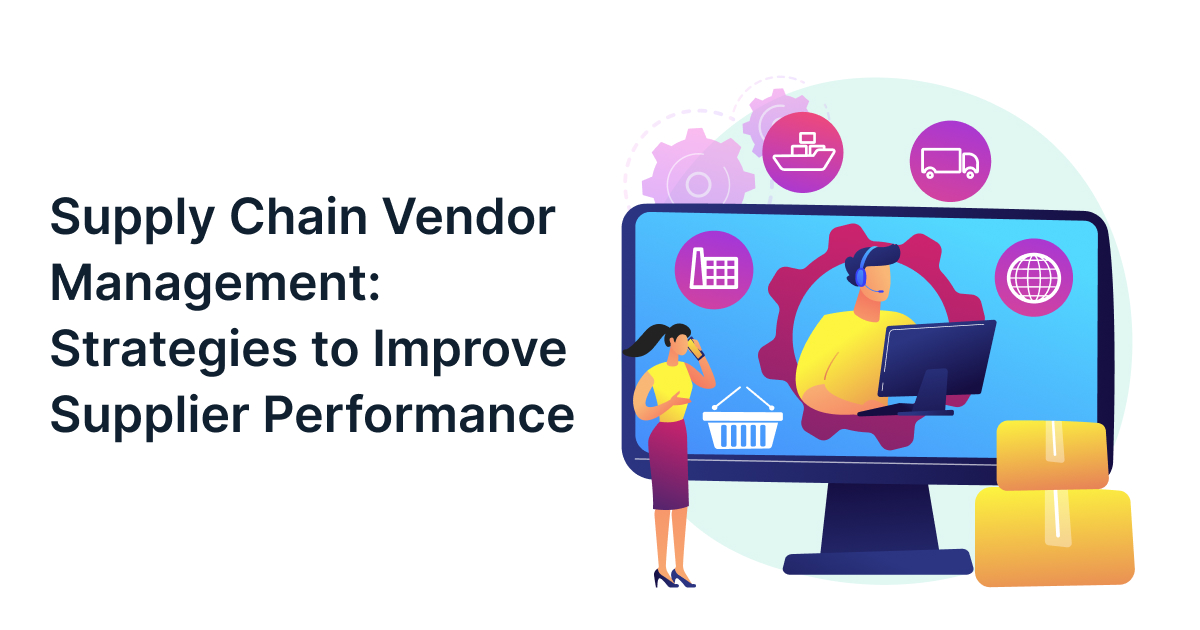
Supply chain vendor management is the process of managing vendors that supply goods or services across the supply chain. It includes vendor selection in supply chain management, supplier compliance management, vendor performance monitoring, and collaboration between vendors and procurement teams.
Strong supply chain and vendor management enables organizations to reduce supply disruptions, improve supplier performance, and strengthen vendor supplier relationships. Businesses that implement structured vendor management strategies gain better visibility into vendor performance and supply chain risks.
When Vendor Performance Fails, Supply Chains Break
Modern supply chains depend on a network of vendors, logistics providers, technology partners, and suppliers.
But many organizations still manage their supply chain vendor ecosystem using disconnected processes like:
- spreadsheets
- email approvals
- fragmented vendor onboarding
- manual compliance tracking
This creates operational blind spots.
Procurement teams struggle with:
- poor supplier performance visibility
- vendor compliance risks
- delayed vendor onboarding
- inconsistent vendor evaluation
These challenges make it difficult to maintain supply chain stability.
That’s why companies are investing in structured vendor governance and supplier lifecycle management platforms like ProcBay’s Supplier Management platform to manage vendors across the supply chain.

What Is Supply Chain Vendor Management?
Supply chain vendor management refers to the process of managing vendors who support supply chain operations.
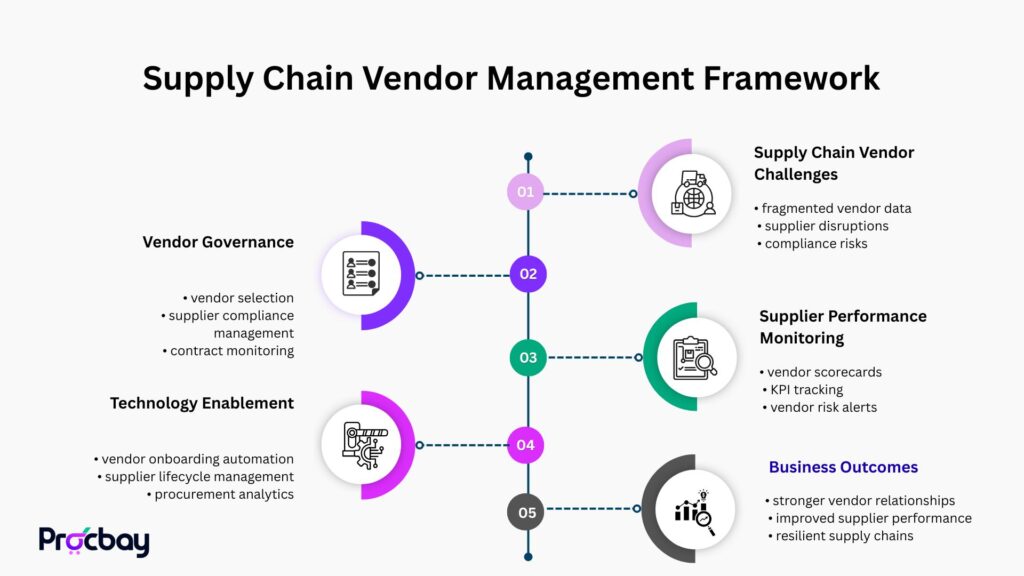
A vendor in supply chain management may include:
- raw material suppliers
- manufacturing partners
- logistics providers
- technology vendors
- service providers
Effective supply chain and vendor management ensures these vendors meet performance expectations across cost, delivery, quality, and compliance.
The process typically includes:
- vendor selection in supply chain management
- supplier compliance management
- supplier performance monitoring
- contract governance
- vendor supplier relationship management
When managed effectively, organizations build stronger supplier networks and reduce supply chain disruptions.
Organizations that follow structured vendor lifecycle governance practices often achieve better vendor performance outcomes, as explained in Vendor Lifecycle Best Practices for Procurement Success.
Why Vendor Management Is Critical in Supply Chains
Supply chains today operate across multiple suppliers, geographies, and regulatory environments.
Without structured vendor oversight, companies face risks such as:
- supplier non-compliance
- delivery delays
- quality issues
- operational disruptions
Vendor management allows procurement teams to maintain accountability across their vendor ecosystem.
Companies that align vendor governance with structured procurement strategies also improve sourcing outcomes. Many organizations integrate vendor oversight with structured sourcing frameworks such as those described in Strategic Procurement Process: Step-by-Step Guide.
| “Closer relationships between buyers and suppliers could create significant value and help supply chains become more resilient.”
Source: McKinsey & Company |
This perspective highlights a major shift: organizations are moving from vendor transactions to vendor partnerships.
Key Components of Effective Supply Chain Vendor Management
Effective vendor management programs focus on governance, performance monitoring, and collaboration.
| Vendor Management Component | Why It Matters |
| Vendor selection in supply chain management | Ensures reliable vendors are selected |
| Supplier compliance management | Maintains regulatory and policy adherence |
| Vendor performance monitoring | Tracks supplier delivery and quality |
| Contract governance | Ensures vendors meet contractual obligations |
| Vendor supplier relationship management | Strengthens collaboration |
| Vendor risk monitoring | Reduces supply chain disruptions |
These components help organizations maintain visibility across their supply chain vendor ecosystem.
6 Strategies to Improve Supplier Performance
Improving supplier performance requires structured vendor management strategies.
1. Improve Vendor Selection
Strong vendor selection is the foundation of supply chain performance.
Procurement teams should evaluate:
- operational capability
- compliance readiness
- delivery reliability
- financial stability
Many organizations align vendor selection with structured sourcing strategies such as those explained in Strategic Sourcing vs Tactical Sourcing: Key Differences.
2. Implement Supplier Compliance Management
Compliance failures can disrupt supply chains.
Supplier compliance management ensures vendors meet:
- regulatory requirements
- procurement policies
- contractual obligations
This reduces operational and legal risks.
3. Track Vendor Performance Metrics
Procurement teams must monitor vendor performance continuously.
Key metrics include:
- delivery reliability
- product quality
- SLA compliance
- responsiveness
These insights help identify underperforming suppliers early.
4. Strengthen Vendor Supplier Relationships
Organizations that treat vendors as partners often see better performance outcomes.
Strong vendor relationships enable:
- faster issue resolution
- stronger collaboration
- innovation with suppliers
5. Centralize Vendor Data and Processes
Fragmented vendor data limits procurement visibility.
Centralized platforms allow organizations to manage:
- vendor onboarding
- supplier documentation
- contracts
- supplier analytics
Organizations that implement structured intake and approval workflows often improve procurement efficiency, as described in Boost Efficiency with Workflow Agents in Business.
6. Use Technology to Manage Vendor Ecosystems
Manual vendor management does not scale across large supply chains.
Digital procurement platforms help automate:
- vendor onboarding
- compliance verification
- vendor performance tracking
- supplier lifecycle management
This creates a more structured vendor ecosystem.
Did You Know?
Nearly 79% of organizations report supplier disruptions as a major supply chain risk, highlighting the need for stronger vendor oversight.
Common Vendor Management Mistakes
Even experienced procurement teams face vendor governance challenges.
Common mistakes include:
1. Choosing vendors based only on cost
Low-cost vendors may introduce reliability risks.
2. Poor supplier visibility
Without structured monitoring, vendor performance issues go unnoticed.
3. Weak vendor collaboration
Transactional relationships often lead to misaligned expectations.
4. Lack of centralized vendor data
Disorganized vendor information limits procurement visibility.
Avoiding these mistakes improves supply chain stability.
How Procurement Platforms Like ProcBay Help
Managing complex vendor ecosystems requires structured procurement tools.
Platforms like ProcBay help organizations manage supply chain vendors through:
- automated vendor onboarding
- supplier compliance management
- vendor performance dashboards
- supplier lifecycle management
- integrated procurement workflows
By connecting sourcing, supplier management, and procurement execution, organizations gain better visibility into vendor performance across their supply chain.
Final Takeaway
Vendor performance directly affects supply chain performance.
Organizations that invest in structured supply chain vendor management strategies gain:
- stronger vendor relationships
- better supplier compliance visibility
- improved procurement efficiency
- reduced supply chain disruptions
As supply chains become more complex, companies that proactively manage vendors will build more resilient supplier ecosystems.
FAQs
Q: What is supply chain vendor management?
A: Supply chain vendor management is the process of managing vendors that supply goods or services within a supply chain to ensure compliance, performance, and operational reliability.
Q: Why is vendor management important in supply chains?
A: Vendor management helps organizations maintain supplier quality, reduce operational risks, and ensure reliable delivery of goods and services.
Q: What is vendor selection in supply chain management?
A: Vendor selection is the process of evaluating suppliers based on cost, reliability, compliance, and operational capabilities.
Q: What is supplier compliance management?
A: Supplier compliance management ensures vendors follow regulatory standards, procurement policies, and contractual obligations.
Q: How can companies improve vendor supplier relationships?
A: Companies improve vendor relationships through transparent communication, performance monitoring, and collaborative supplier engagement.
Connect with our procurement experts to tailor an AI-governed sourcing strategy for your enterprise.
Contact Us