Summary:
Vendor lifecycle management is the structured process of managing suppliers from identification and onboarding to performance monitoring, contract management, renewal, or exit. A well-governed vendor lifecycle helps procurement teams ensure supplier compliance, reduce operational risks, and maintain consistent supplier performance. By managing vendor discovery, qualification, contracting, and monitoring systematically, organizations can strengthen supplier relationships while improving cost control and procurement efficiency.
What is Vendor Lifecycle Management?
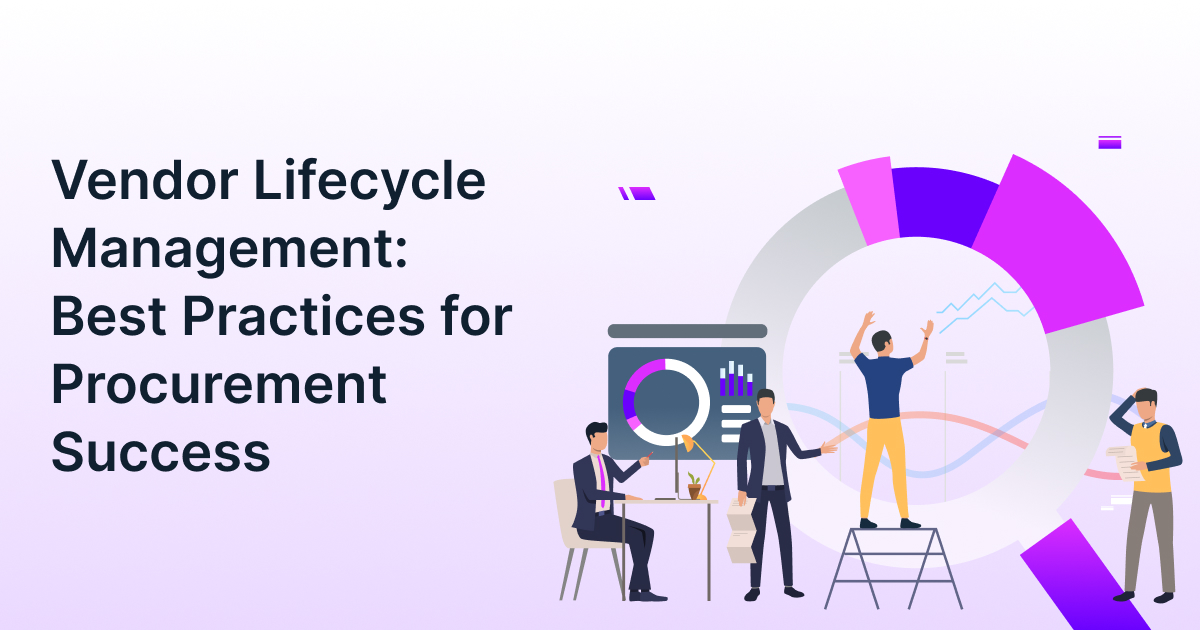
Vendor lifecycle management is the structured process of managing suppliers from identification and onboarding to contract management, performance monitoring, and renewal. The vendor lifecycle helps procurement teams ensure suppliers remain compliant, accountable, and aligned with organizational goals.
The typical vendor lifecycle management process includes vendor discovery, qualification, supplier selection, contracting, performance monitoring, and renewal or exit. When these stages are managed systematically, procurement teams can reduce supplier risks, enforce contract compliance, and improve vendor performance.
A well-governed vendor management cycle enables organizations to maintain strong supplier relationships while ensuring procurement decisions support long-term cost control and operational stability.

Why Vendor Lifecycle Management Matters
Procurement today operates in a complex supplier ecosystem where organizations rely heavily on external vendors for goods, services, and operational support.
However, many procurement teams still manage supplier relationships through disconnected systems and manual processes. When vendor governance is fragmented, organizations often struggle with issues such as delayed onboarding, contract non-compliance, and inconsistent supplier performance monitoring.
A structured vendor lifecycle management process helps procurement teams address these challenges by creating a clear governance framework for managing suppliers from onboarding to renewal.
This approach ensures suppliers are properly vetted, contracts are enforced, and performance expectations remain transparent throughout the supplier relationship.
As procurement organizations scale, vendor lifecycle governance becomes essential for maintaining operational stability and procurement efficiency.
Understanding the Vendor Lifecycle in Procurement
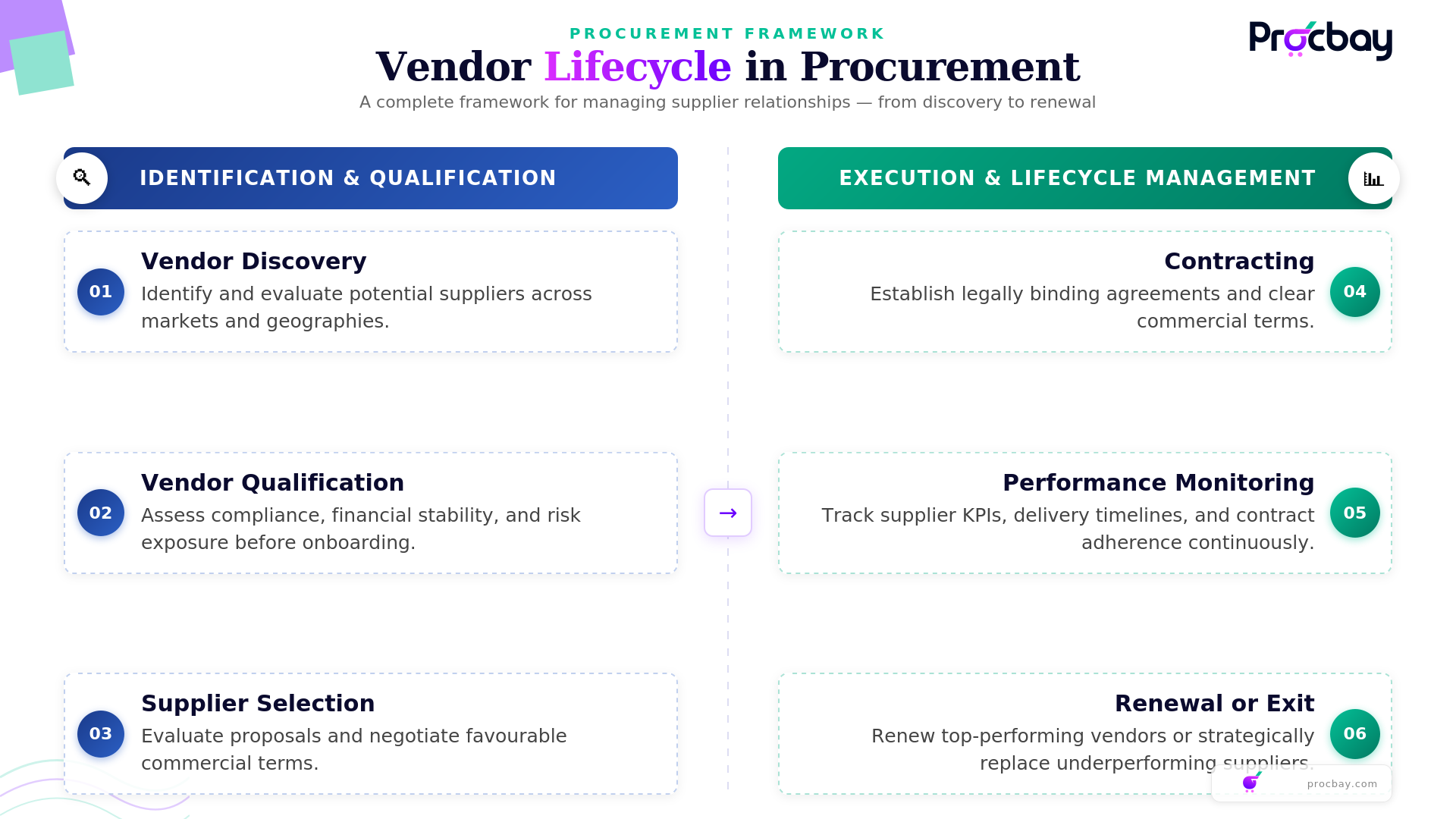
The vendor lifecycle represents the complete journey a supplier follows when working with an organization. It begins when procurement teams identify potential vendors and continues throughout the relationship until the supplier contract is renewed or terminated.
Managing this lifecycle effectively requires structured oversight at every stage of the vendor management cycle.
Instead of treating supplier engagement as a series of isolated activities, procurement teams must manage vendor relationships as an integrated process. Each stage of the lifecycle influences supplier performance, risk exposure, and overall procurement outcomes.
Organizations that manage the contract vendor lifecycle effectively are better positioned to maintain supplier accountability while ensuring procurement decisions remain aligned with business objectives.
Key Management Steps of the Vendor Lifecycle
| Vendor Lifecycle Stage | Key Procurement Activities | Business Impact |
| Vendor Discovery | Supplier identification, market research | Expands sourcing opportunities |
| Vendor Qualification | Compliance verification, risk checks | Reduces supplier risk |
| Vendor Selection | RFP evaluation and negotiation | Improves pricing outcomes |
| Contracting | Contract drafting and approvals | Ensures legal and commercial protection |
| Performance Management | KPI tracking and supplier scorecards | Drives supplier accountability |
| Renewal or Exit | Contract renewal or supplier replacement | Maintains procurement flexibility |
These management steps of the vendor lifecycle ensure procurement teams maintain consistent supplier governance across the entire procurement process.
|
“When buyers and suppliers collaborate effectively, they often unlock new sources of value beyond price.” — McKinsey & Company |
Best Practices for Vendor Lifecycle Management
Centralize Vendor Data
A centralized supplier repository helps procurement teams maintain accurate vendor records. When supplier data is fragmented across multiple systems, it becomes difficult to track vendor performance or enforce compliance requirements.
Centralized vendor data improves visibility and ensures procurement teams always work with verified supplier information.
Standardize Vendor Onboarding
Vendor onboarding should follow a consistent process that includes compliance checks, documentation verification, and supplier validation. Standardized onboarding reduces supplier risk and ensures vendors meet procurement requirements before engagement.
Strengthen Contract Governance
Contracts define the commercial relationship between organizations and vendors. Effective contract vendor lifecycle management ensures procurement teams track pricing agreements, service commitments, and compliance obligations.
Strong contract governance also supports broader procurement initiatives such as overcoming strategic sourcing challenges that impact supplier selection and negotiation outcomes.
Monitor Vendor Performance Regularly
Vendor lifecycle management should include continuous performance monitoring. Procurement teams should track delivery timelines, service quality, and contract compliance through supplier scorecards.
Performance visibility helps procurement teams address vendor issues early and improve supplier accountability.
Align Vendor Management with Procurement Strategy
Not every supplier requires the same level of governance. Strategic suppliers require deeper oversight compared to tactical vendors.
Understanding the difference between tactical vs strategic sourcing allows procurement teams to apply appropriate lifecycle governance based on supplier importance.
Common Vendor Lifecycle Challenges
Even well-established procurement teams face challenges when managing suppliers across multiple departments and systems.
Fragmented Supplier Records
Supplier data stored in spreadsheets or disconnected systems creates inconsistencies that affect procurement visibility.
Manual Vendor Onboarding
Manual onboarding processes slow vendor activation and increase the risk of missing compliance checks.
Limited Supplier Performance Monitoring
Without structured vendor scorecards, procurement teams struggle to measure supplier reliability or service quality.
Contract Compliance Gaps
When contracts are not centrally tracked, organizations may unknowingly purchase outside negotiated agreements, impacting financial outcomes and procurement budget control.
Reactive Vendor Governance
Many organizations only address supplier issues when problems occur rather than proactively managing vendor performance throughout the lifecycle.
These challenges highlight the need for structured lifecycle management supported by centralized procurement systems.
Did You Know?
Organizations that implement structured vendor lifecycle governance can improve supplier compliance rates by up to 30–40% while significantly reducing supplier-related operational risks.
How Technology Strengthens Vendor Lifecycle Management
Modern procurement platforms enable organizations to manage the entire vendor lifecycle management process through a centralized system.
Technology allows procurement teams to automate vendor onboarding, maintain structured supplier records, and monitor supplier performance across procurement operations.
Digital procurement systems also ensure vendor contracts remain visible throughout the purchasing process, preventing off-contract spending and improving procurement governance.
By connecting supplier onboarding, sourcing, contracting, and purchasing workflows, procurement platforms help organizations maintain visibility across the entire vendor management cycle.
Platforms such as ProcBay enable procurement teams to structure vendor lifecycle governance while maintaining control across intake, sourcing, contract approvals, and purchase execution.
FAQs
Q: What is vendor lifecycle management?
A: Vendor lifecycle management is the structured process of managing suppliers from discovery and onboarding through contract management, performance monitoring, and renewal.
Q: What are the stages of the vendor lifecycle?
A: The vendor lifecycle typically includes vendor discovery, qualification, supplier selection, contracting, performance monitoring, and renewal or exit.
Q: Why is vendor lifecycle management important in procurement?
A: It helps procurement teams ensure supplier compliance, maintain contract enforcement, and improve supplier performance visibility.
Q: How does vendor lifecycle management reduce procurement risk?
A: By enforcing compliance checks, monitoring supplier performance, and ensuring contracts are followed throughout the supplier relationship.
Q: How do procurement platforms support vendor lifecycle management?
A: Procurement platforms centralize supplier data, automate onboarding workflows, track contracts, and enable supplier performance monitoring.
Strengthen Your Vendor Lifecycle Governance
Managing suppliers effectively requires structured lifecycle governance that connects vendor onboarding, contract management, and supplier performance monitoring.
ProcBay helps procurement teams manage the entire vendor lifecycle from supplier onboarding to contract-backed purchasing, within a centralized procurement platform.
Connect with our procurement experts to tailor an AI-governed sourcing strategy for your enterprise.
Contact Us