
As organizations grow, contract volumes and complexity increase faster than teams can handle manually.
A routine agreement can quickly turn into a source of operational risk, missed obligations, and delayed decisions when critical information stays hidden in documents. This is why more companies are adopting contract intelligence use cases to improve visibility, control, and accuracy in contract-driven operations.
Without intelligence, contracts are often scattered across shared drives and inboxes. Teams only review them when problems come up, and they remain disconnected from operational work. Contract intelligence changes this by turning agreements into structured, searchable data. It helps teams monitor obligations, spot risks early, and make confident decisions in real time at scale.
In this blog, we discuss how contract intelligence works, key use cases across industries, essential features to consider, common challenges it addresses, and emerging trends that are shaping the future of intelligent contracting.
“AI must prove it’s worth by delivering real-world impact and improving outcomes across industries.”
— Satya Nadella, CEO, Microsoft
Contract intelligence refers to the use of AI, machine learning, and natural language processing (NLP) to analyze contract content automatically. Unlike simple document storage, contract intelligence software understands clauses, obligations, risks, and business terms found in agreements.
Once extracted, this data can be tracked, searched, and managed through organized systems. Just as workflow management software helps businesses define and control operational processes, contract intelligence provides order and consistency in how agreements are understood and carried out across teams. By linking contract data with approvals and execution workflows, organizations lower the need for manual follow-ups and gain real-time insights into contract performance.
DID YOU KNOW?
Organizations that rely on structured execution systems rather than email-based coordination consistently report faster cycle times and fewer manual errors—especially as scale increases.
Why Contract Intelligence Matters for Modern Enterprises
Contracts influence nearly every function, including procurement, finance, legal, compliance, and operations. When contract information is locked in documents, teams lose visibility, decision-making slows, and risk rises.
Intelligent contracting ensures that obligations, renewals, and approvals follow clear rules instead of relying on informal follow-ups. This is similar to how structured workflows improve accountability and clarity in processes across teams, helping work to progress smoothly without confusion or delays. When paired with contract management software that uses AI, contract intelligence allows for better governance without increasing operational friction.
Spend Smarter. Grow Faster.
Gain control of expenses and boost efficiency with Procbay.
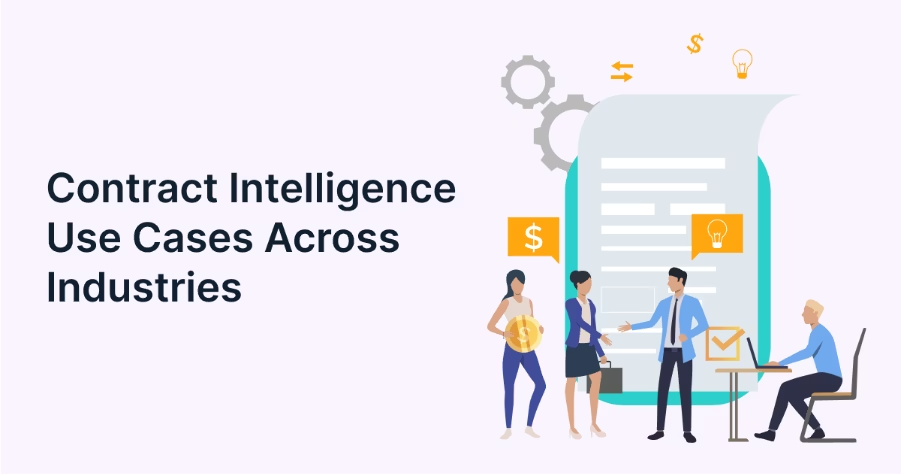
Contract Intelligence Use Cases Across Industries
Legal and Compliance Teams Legal teams handle policy adherence, regulatory compliance, and contract risk. With contract intelligence solutions, they can automatically spot non-standard clauses, track deviations, and make sure agreements use approved language.
Incorporating contract reviews into automated approval workflows already used for enterprise processes cuts down on bottlenecks and improves audit readiness, especially during regulatory reviews and M&A activity.
Procurement and Supply Chain Procurement depends on contracts to manage pricing, service level agreements, penalties, and renewal timelines. Without proper oversight, missed renewals and unmanaged obligations can lead to cost losses.
With contract intelligence software, procurement teams can see supplier commitments clearly. This helps them align contract execution with procurement workflows that standardize requests, approvals, and controls. As a result, procurement teams can negotiate more effectively, enforce terms consistently, and manage supplier operations with greater confidence.
Finance and Accounting
Contracts define payment schedules, revenue milestones, and billing conditions. A reliable contract intelligence platform extracts these terms automatically and makes them accessible for forecasting and reporting.
When finance teams operate with real-time workflow visibility instead of manual coordination, they reduce billing errors and shorten close cycles, freeing time for analysis rather than follow-ups.
Risk and Insurance
Risk exposure often lies hidden in contract language. Contract intelligence solutions help risk teams find liabilities, indemnities, and termination clauses in large contract portfolios. By connecting contract risk insights with audit-ready workflows that require approvals and traceability, organizations boost compliance and minimize exposure before problems arise.
Healthcare and Life Sciences
Healthcare organizations manage complex provider agreements and reimbursement contracts. Contract intelligence helps extract obligations quickly and ensures compliance with regulatory requirements.
When contract execution is tied into structured operational workflows, healthcare teams gain better control over reporting, compliance, and execution without increasing administrative effort.
Essential Capabilities of Contract Intelligence Software
Before selecting a platform, enterprises should evaluate whether the solution supports intelligence, governance, and scalability, not just extraction.
Here’s a checklist aligned to enterprise needs:
| Feature Area | Key Capabilities | Business Impact |
| Data Extraction | NLP clause capture, tagging | Faster analysis |
| Risk Detection | Clause comparison, policy checks | Reduced exposure |
| Obligation Tracking | Alerts, renewals, milestones | Compliance control |
| Search & Analytics | Filters, dashboards, reporting | Faster decisions |
| Integration | ERP, procurement, workflows | End-to-end execution |
A structured checklist reduces implementation risk and ensures long-term ROI, especially when integrated with contract management software AI capabilities.
Trends Shaping the Future of Intelligence Contracting
As companies grow, expectations move beyond simple automation. The main trends influencing intelligence contracting include:
- AI-driven recommendations to flag bottlenecks and risks early
- low-code workflow configuration to reduce IT dependency
- cloud-first architecture enabling scalability and remote access
- modular workflows that adapt as policies and business structures change
- advanced analytics to forecast delays and contract exposure
These trends position contract intelligence as a key part of enterprise digital transformation, not just a legal tool.
Common Challenges Solved by Contract Intelligence Platforms
Organizations often struggle with problems caused by disconnected contract processes and a lack of visibility. A modern contract intelligence platform helps by:
- contract fragmentation across inboxes and drives
- reducing manual follow-ups with automated alerts
- improving visibility into ownership, status, and deadlines
- strengthening compliance through approvals and audit trails
- supporting growth without increasing administrative overhead
Simplify Procurement. Accelerate Growth.
Procbay’s AI streamlines requests, approvals, and vendors, so you save time and scale faster.
Choosing Contract Intelligence Built for Scale
Contract intelligence is no longer optional for growing businesses. Operational resilience needs structured execution, real-time visibility, and governance. Organizations that embrace scalable, AI-powered contract intelligence can make faster decisions, lower risks, and gain value from agreements.
Unlock the full potential of intelligent contracting. See how scalable systems improve efficiency, compliance, and growth. Schedule a demo with Procbay today and take the next step toward top-tier contract intelligence.
FAQs
Q: What are contract intelligence use cases?
A: Contract intelligence use cases include automated clause extraction, risk detection, obligation tracking, renewal alerts, compliance monitoring, and analytics across contract portfolios.
Q: What is the difference between contract intelligence software and contract management?
A: Contract management focuses on storing and tracking documents. Contract intelligence software analyzes contract content using AI to generate insights and proactive alerts.
Q: What is a contract intelligence platform used for in procurement?
A: A contract intelligence platform helps procurement teams track SLAs, pricing terms, penalties, renewals, and supplier obligations with better visibility and automation.
Q: Are contract intelligence solutions suitable for mid-sized companies?
A: Yes. Contract intelligence solutions help mid-sized organizations manage growing contract A contract intelligence platform helps procurement teams track SLAs, pricing terms, penalties, renewals, and supplier obligations with better visibility and automation. complexity without needing large legal or operations teams.
Q: Does contract management software AI help reduce compliance risk?
A: Yes. Contract management software AI can identify non-standard clauses, track obligations, and support audit trails, which lowers compliance risk.


 10th February 2026