Late deliveries, duplicate invoices, and endless spreadsheet reconciliations deplete time and capital from even the most disciplined Procure-to-Pay (P2P) cycle. Imagine if every stakeholder, from tactical buyers to the CFO, could immediately see supplier risk signals and cost variances the moment they surfaced. According to CIPS, 60% of procurement leaders report that manual supplier performance monitoring causes critical visibility gaps (CIPS, 2023). In the next few minutes, you will learn exactly how to replace those gaps with interactive, real time supplier performance dashboards, select the most effective metrics for performance KPI tracking, and chart a clear migration path from Excel to automated insight.
Why Manual Supplier Monitoring Holds Procurement Back
Manual supplier performance monitoring in procurement typically involves siloed emails, quarterly scorecard PDFs, and late-stage firefighting.
The fallout is familiar:
- Limited Spend Visibility: Data resides in ERP exports, AP systems, and handwritten QA logs, which makes cross-supplier comparisons impossible.
- Maverick Spend Escalates: When buyers lack visibility into which vendors are under-performing, they often bypass contracts and create shadow purchase orders.
- Resource Drain: Analysts spend days collating on-time delivery statistics instead of negotiating improved Service Level Agreements (SLAs). This is a common pain point for enterprises seeking AI-powered procurement tools for Dubai SMEs.
- Compliance Exposure: Without a reliable audit trail, proving adherence to ESG or cybersecurity mandates becomes both risky and costly.
For CFOs and CIOs, these friction points translate to higher working capital, missed early-payment discounts, and unplanned IT integration projects.

What Modern Supplier Performance Monitoring Looks Like
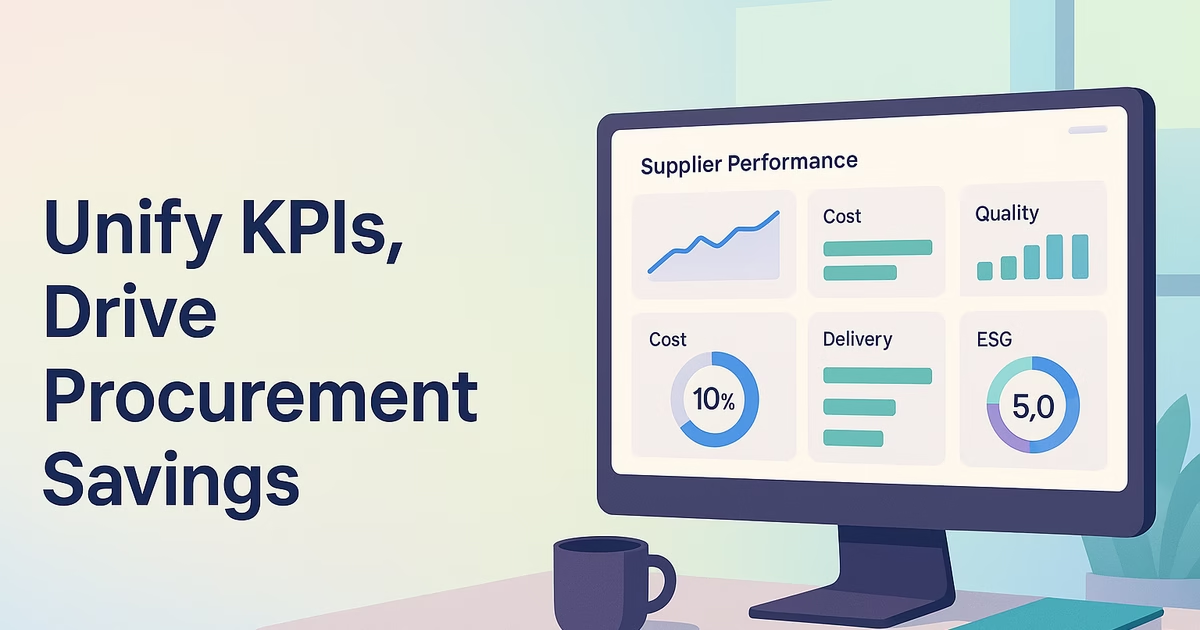
A modern approach links performance KPI tracking, spend data, and risk signals into a single supplier scorecard dashboard that updates instantly when a transaction posts. This real-time visibility is vital for large operations, particularly those undergoing Procurement transformation strategies in Qatar construction firms.
Anatomy of a Supplier Scorecard Dashboard
- Unified Data Spine: Connect intake-to-pay transactions, Quality Assurance (QA) inspections, and risk feeds into one query-ready lake. This allows for comprehensive supplier performance monitoring across all touchpoints.
- Role-Based Lenses: Buyers see order-level detail; executives view category roll-ups; suppliers get controlled portal access.
- Exception Alerts: Threshold breaches (e.g., on-time delivery below 95%) trigger automated workflows rather than monthly surprises.
- Embedded Audit Trail: Every data point ties back to the original Purchase Order (PO), goods receipt, and three-way match status for instant compliance proof. Companies needing a procurement automation process in Saudi government projects rely on this feature.
- Mobile & Accessibility Layers: Responsive charts and color-blind-friendly palettes keep insights available anywhere, for everyone.
Multi-Dimensional KPIs to Track
The dashboard must go beyond cost and delivery. Leading teams layer in Environmental, Social, and Governance (ESG), innovation, and risk metrics. Comprehensive supplier performance monitoring requires this multi-faceted view.
| KPI Category | Example Metric | Data Source | Why It Matters |
|---|---|---|---|
| Cost | Unit price variance vs. contract | ERP/AP | Detects leakage and maverick spend |
| Quality | Defect rate per 1,000 units | QA system | Drives warranty and brand reputation |
| Delivery | On-time in full (OTIF) | Logistics/TMS | Impacts inventory and service levels |
| Risk | Cyber-rating delta | External risk feed | Flags potential breaches |
| ESG | CO₂ per shipment | Supplier self-report + IoT | Supports sustainability targets |
| Innovation | New idea adoption rate | SRM portal | Encourages value-add partnerships |
When these metrics refresh continuously, procurement gains true real-time supplier performance dashboards that surface problems before they hit the Profit and Loss (P&L) statement.
The Integrated Supplier Performance Framework
Below is a five-step, ordered framework used by best-in-class enterprises. Following the sequence is crucial; shortcuts re-create old silos and prevent effective supplier performance monitoring.
Baseline & Prioritize
Conduct a spend analysis to rank suppliers by criticality and risk. Focus first on the 20% driving 80% of spend or strategic value. This step is essential for enterprises focused on the Digital transformation of procurement in the Dubai construction sector.
Define KPIs & Thresholds
Collaborate with business owners to set measurable targets (e.g., On-Time, In-Full (OTIF) above 98%, defect rate below 0.5%). Link each performance KPI tracking metric to a Service Level Agreement (SLA) clause for accountability.
Connect Data Sources
Map Procure-to-Pay (P2P), Quality Assurance (QA), logistics, and risk systems into a cloud lake or Application Programming Interface (API) mesh. Modern automated supplier performance monitoring tools—such as Procbay’s Integration Hub—provide pre-built connectors that can cut months of IT work. This capability is key for companies implementing Digital procurement software for Vision 2030 transformation.
Deploy Dashboards & Alerts
Publish supplier scorecard dashboards with drill-down filters. Configure real-time supplier performance dashboards notifications in collaboration platforms so stakeholders can act immediately. This is a primary feature sought in the best e-procurement systems in Qatar.
Review & Improve
Schedule Quarterly Business Reviews (QBRs) focused on root-cause analytics and joint action plans. Continuous data keeps conversations factual, not anecdotal. This strategy underpins successful Procurement technology solutions for Bahrain SMEs.
Pro Tip: Start with a pilot category to iron out data hygiene issues before scaling enterprise-wide.
Proof: Business Impact of Automation, KPI Tracking, and Real-Time Dashboards
The move from manual to automated supplier performance monitoring tools delivers measurable results and significant returns on investment.
- Organizations with automated supplier scorecard dashboard solutions resolve compliance issues twice as fast compared to those using manual methods (Deloitte, 2024).
- Best-in-class procurement teams achieve 20% higher supplier performance through real-time supplier performance dashboards, a capability critical for complex projects like those overseen by Procurement automation software for Oman’s oil and gas sector (Hackett Group, 2024).
One global manufacturer moved from emailed scorecards to an integrated supplier scorecard dashboard. Within six months, On-Time, In-Full (OTIF) improved from 92% to 97%, and finance unlocked $4 million in early-payment discounts—outcomes credited to instant visibility and SLA-based workflows. This success highlights the power of e-procurement management systems in Kuwait and other similar markets.
Roadmap: Moving from Spreadsheets to Automated, Insight-Driven Monitoring
Phase 1: Foundation (Weeks 0–4)
- Data audit – Identify critical tables and file exports; tag owners.
- Governance charter – Establish stewardship and escalation paths for bad data.
Phase 2: Connectivity & Cleansing (Weeks 4–10)
- API/API-less ingestion — Use ELT tools to land P2P, QA, and TMS feeds.
- Normalize dimensions — Align supplier IDs, category codes, and date formats.
Phase 3: Dashboard Prototyping (Weeks 10–14)
- Wireframe role-based views — Executive, category manager, supplier.
- Validate KPI math — Cross-check a month of transactions against legacy reports.
Phase 4: Automation & Alerts (Weeks 14–18)
- Set thresholds — Engage risk and quality teams to finalize.
- Launch real-time alerts — Integrate with Slack, Teams, or email.
Phase 5: Scale & Optimize (Weeks 18–26)
- Expand categories — Bring the long-tail suppliers into scope.
- Introduce predictive analytics — Flag at-risk shipments before they miss dock dates.
- Benchmark performance — Share league tables to encourage supplier competition.
Watch Out: Don’t underestimate change management, teach users to trust automated metrics by co-reviewing early discrepancies.
FAQ
Q: Which KPIs are most critical for supplier performance monitoring in procurement?
A: Core KPIs include cost variance, OTIF, defect rate, cycle-time adherence, risk score changes, and ESG compliance. Choose metrics tied directly to contract SLAs and business outcomes.
Q: How often should supplier performance be reviewed, and by whom?
A: Dashboards run continuously, but formal reviews happen monthly for tactical suppliers and quarterly for strategic partners. Category managers lead, with finance and quality teams participating.
Q: What does a best-in-class supplier scorecard dashboard include?
A: It blends transactional data, visual trend lines, automated alerts, and an audit trail linking each metric to the original PO, receipt, and invoice.
Q: How can teams drive adoption of automated supplier performance monitoring tools?
A: Start with transparent KPI definitions, provide role-based training, and showcase quick wins—such as early-payment discount capture—to build trust.
Q: What integrations are needed to maximize spend visibility and compliance?
A: Connect ERP, AP, QA, logistics, risk intelligence, and contract management systems. APIs or EDI pipes ensure real-time updates without manual intervention.
Next Steps
If you are ready to eliminate spreadsheet chaos and gain instant insight into every supplier commitment, see a live demo of Procbay’s automated supplier performance monitoring tools. You will experience real-time supplier performance dashboards that integrate seamlessly with your existing Procure-to-Pay (P2P) stack and provide an auditable path to lower risk and higher savings. Schedule your executive briefing today.
In a world where visibility equals control, supplier performance monitoring empowers procurement to lead with data, not guesswork. Adopt it now, and watch performance KPI tracking turn into your organization’s competitive advantage. And remember: sustained results come from continuous, automated supplier performance monitoring in procurement, not the next quarterly spreadsheet.
Connect with our procurement experts to tailor an AI-governed sourcing strategy for your enterprise.
Contact Us